


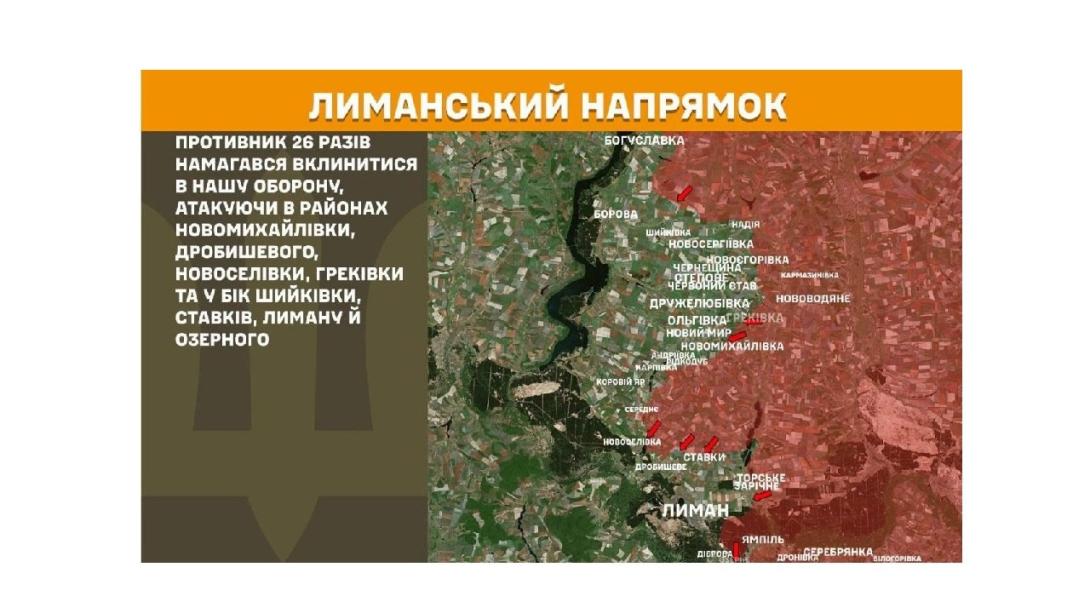
"Russian troops carried out 11 shellings of positions in the territory of Luhansk region, strikes were carried out mainly with the help of drones - nine uses of FPV drones and drops from UAVs were recorded, and mortars and artillery were also used. In the Lyman direction, the enemy tried to penetrate the Ukrainian defenses 26 times, in particular, attacking in the area of the village of Hrekivka in the Svativ region," said Oleksiy Kharchenko, head of the Luhansk Regional State Administration.
The Russian occupation authorities continue to systematically terrorize the residents of Luhansk region. In particular, repressions during customs control have intensified. People are deprived of their liberty without legal grounds and are held in pre-trial detention centers without court sentences, using prohibited interrogation methods and subjecting them to psychological pressure. Family members of detainees are also persecuted. Under the conditions of occupation, any citizen can instantly lose their usual life and become a victim of the impunity of security forces.
The occupation administration in Luhansk region is intensifying censorship and mass control over public opinion, trying to create an artificial illusion of stability for local residents. All media outlets and social media administrators have received a strict unspoken instruction to completely hide visual materials and factual information about the consequences of any emergency events, fires or destruction at industrial and infrastructure facilities both in the occupied territories and in the Russian Federation itself. Instead, the information space is purposefully filled only with messages beneficial to the authorities in order to artificially reduce the level of public anxiety and prevent mass discontent. Such a total information purge has already forced large resources to radically change content under the threat of criminal prosecution, effectively driving the population into a fictional reality where not only large-scale incidents are strictly silenced, but also acute everyday crises, including fuel and food shortages and chronic interruptions in the supply of water and electricity.