



Just a few years ago, she worked with children in her native Sievierodonetsk, and today she is building her professional life from scratch in another city.
Kateryna Ovsiannikova is a speech therapist with ten years of experience. She began her professional path in a kindergarten in Sievierodonetsk, where she worked as an educator. Later, she started practicing speech therapy, a field that was in high demand in the city.
With the start of the full-scale invasion, Ms. Kateryna and her family moved to Zaporizhzhia, where they lived for two and a half years. Later, the family was forced to move again, this time to Zhytomyr, where they are now settling into a new life.
Kateryna Ovsiannikova told SD.UA about the demand for speech therapy services in Sievierodonetsk before the full-scale war, restoring her professional activity in Zhytomyr, her personal approach to work, and her training courses.
- You have been working in speech therapy for about 10 years. How did you come to speech therapy, and what was decisive in choosing this profession?
- My path into the profession was gradual. In 2011, I graduated from Taras Shevchenko Luhansk National Pedagogical University and went to work as an educator in a regular kindergarten in Sievierodonetsk. Although I had a dual qualification as an educator-speech therapist, at first I was afraid to work specifically in speech therapy.
For four years, until my first maternity leave, I worked as an educator. When my first child was nine months old, I decided to try myself in the role of a speech therapist and earn a little money at the same time. That was the beginning of my practical experience in speech therapy. Later, my second child was born. After some time, I went to work at another preschool as a senior educator-methodologist and part-time speech therapist.
When the full-scale invasion began, I certainly did not give up and continued my professional journey.
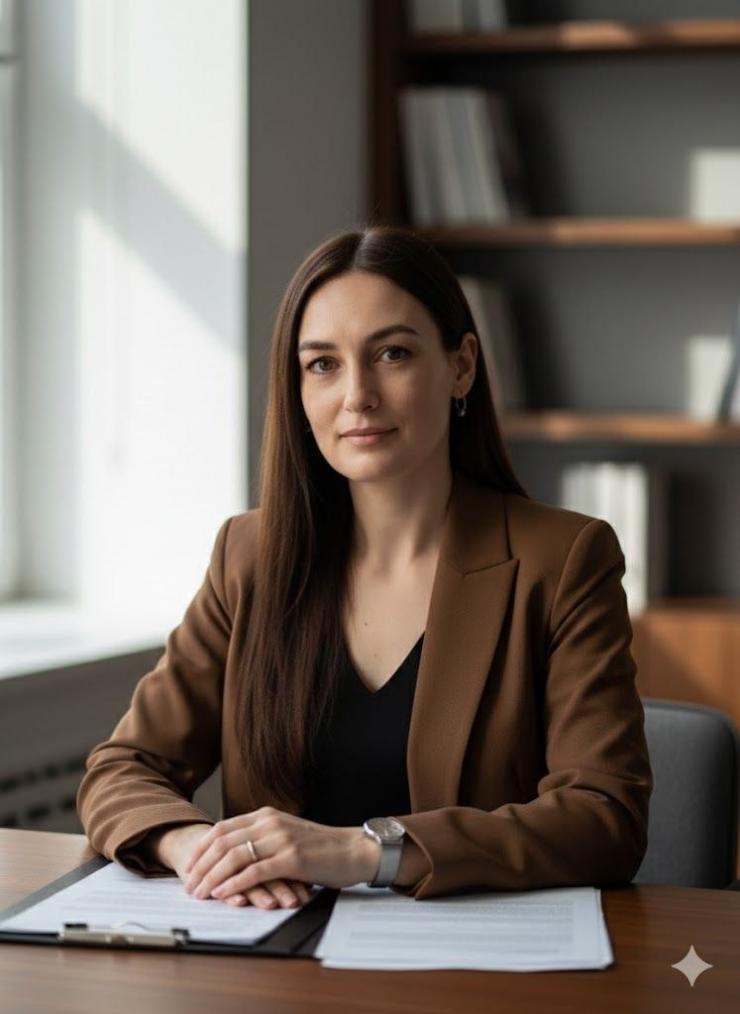
Kateryna Ovsiannikova
- How developed was the speech therapy field in the city before the full-scale war? Was there demand?
- Yes, there was noticeable demand for speech therapy services. At that time, there were many children who needed a speech therapist’s help, though their disorders were mostly milder compared to what we encounter today.
Our kindergarten had inclusive groups, and we worked with children with autism spectrum disorders, developmental delay, and other specific needs. Overall, there were truly many children who needed speech therapy support.
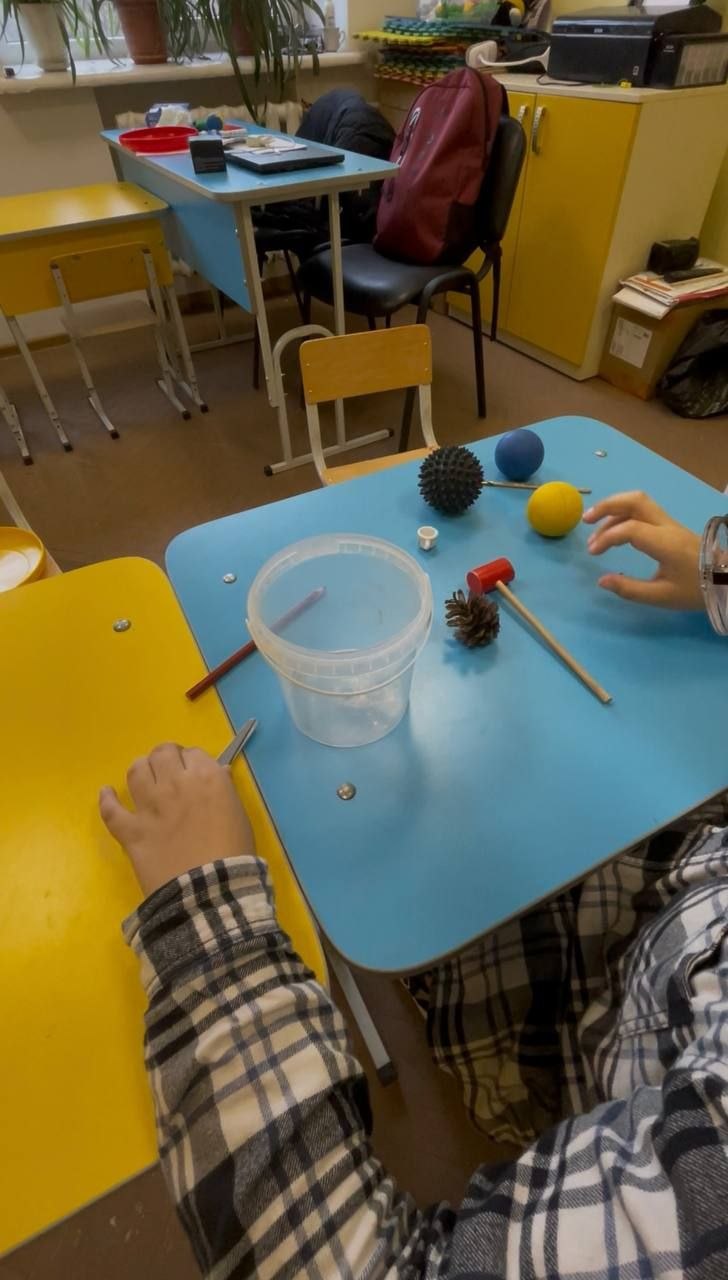
Work
- Could you tell us about your forced relocation journey: when and under what circumstances did you leave the city? Where did the full-scale invasion find you?
- Now I relate to this experience much more calmly. I have accepted the fact that a new life has begun for me.
The full-scale invasion found me at home, in Sievierodonetsk. On the very first day of the war, my family and I decided to leave and moved to Zaporizhzhia, where my grandparents lived. Unfortunately, they are no longer with us.
We lived in Zaporizhzhia for about two and a half years. But over time, the issue of safety and change came up again, and my husband was being transferred for work. So we moved to Zhytomyr, where we have been living for a year and a half.
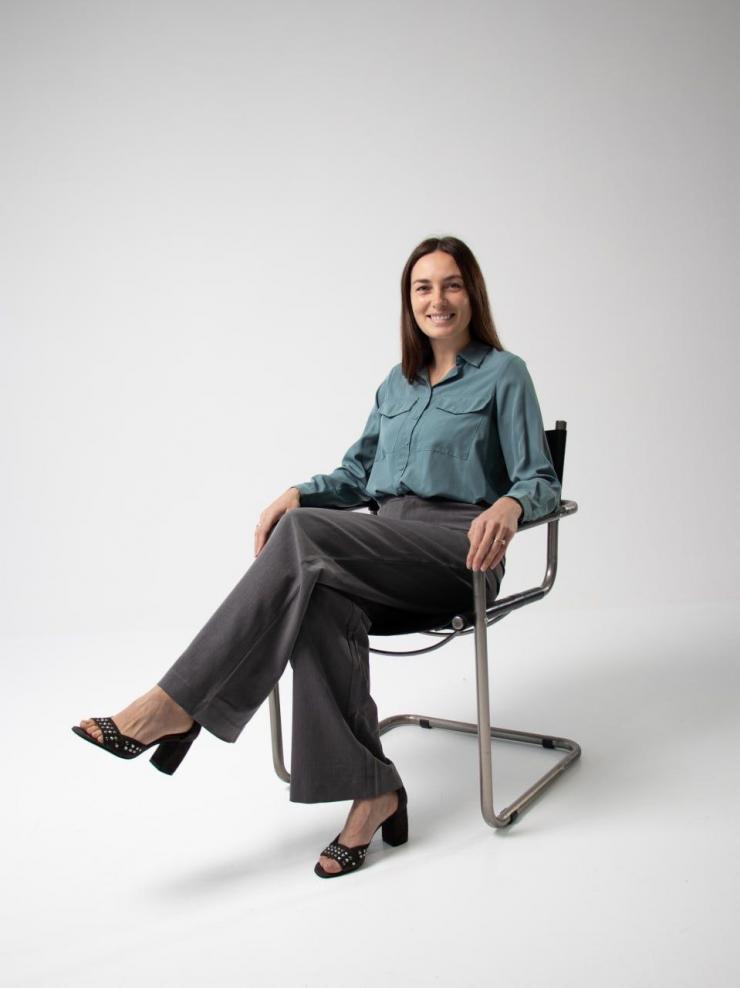
Kateryna Ovsiannikova
- How did these events affect your professional activity and work format?
- When the full-scale war began, from late February to October I essentially did not take on new children. To avoid losing my professional skills, I worked with only two children, both with relatively mild disorders.
Starting in November 2022, I pulled myself together, so to speak, and began gradually restoring my work. In a new city, it was not easy: I knew no one, and no one knew me. But word of mouth worked.
We lived in a residential district with no development centers nearby, so at first I took on a small number of children, and later, thanks to recommendations, new clients started coming.
Since then, I have managed to return to stable work and my usual rhythm of life, despite all the circumstances.

Kateryna Ovsiannikova
- You note that you work not with symptoms but with the mechanisms of disorders. What does that mean in practice?
- When I say I work not with symptoms but with mechanisms of disorders, I mean a deeper approach to the problem. A symptom is what is visible on the surface and what even parents can notice. For example, if a child is not speaking, that is already a symptom.
But for effective work, it is important to understand the cause, that is, the mechanism of the disorder: what exactly happened in the child’s development, at what stage the “breakdown” occurred, and which processes are functioning incorrectly. Without this, it is impossible to build a proper correction path and help the child begin speaking.
The same applies to sound pronunciation disorders: if you work only with what is heard externally but do not understand the cause that led to it, the result will be superficial or unstable. Only working with mechanisms makes it possible to achieve a full and stable norm.
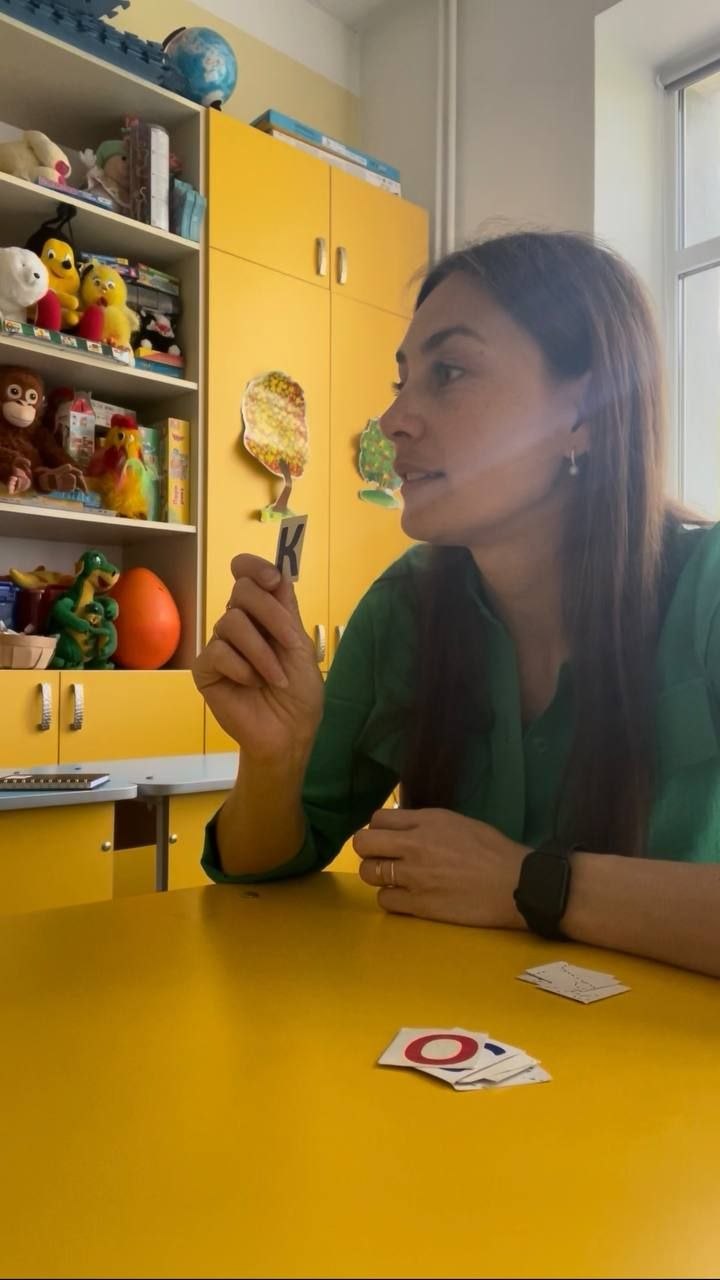
Kateryna Ovsiannikova
- How does the classical speech therapy approach differ from the one you use?
- The classical speech therapy approach we were taught at university assumes a rather generalized classification of speech disorders. For example, children with different characteristics, non-speaking children, children with impaired phonemic perception, or difficulties with motor switching, may end up in one group without sufficient differentiation.
The modern approach I follow is based on deeper analysis and distinction of disorders. We carry out in-depth diagnostics of children, identify specific mechanisms of difficulties, and build corrective work accordingly.
Unfortunately, modern terminology is not always officially закрепed at the official level, so we cannot fully use it in documentation. However, this does not prevent us from working with quality. The most important thing is that the specialist clearly understands what problem the child has come with, how to work properly, and how to build the correction path.
We are gradually moving toward updating classifications, because modern children present us with different challenges, and what is described in textbooks does not always match real practice.
Work
- How closely connected are speech development and motor skills? Why does development, in your words, begin with movement?
- Speech development and motor skills are very closely connected. Today we see that many children have limited physical activity, largely because of excessive gadget use. From an early age, a child spends a lot of time in front of a screen with their head bent, while it should be upright, and instead of moving actively, exploring space, and interacting with objects. This compresses blood vessels, and the brain receives insufficient oxygen.
It is through movement that a child learns about the world: crawling, walking, picking up objects, and exploring them. If this experience is insufficient, overall development suffers, including speech.
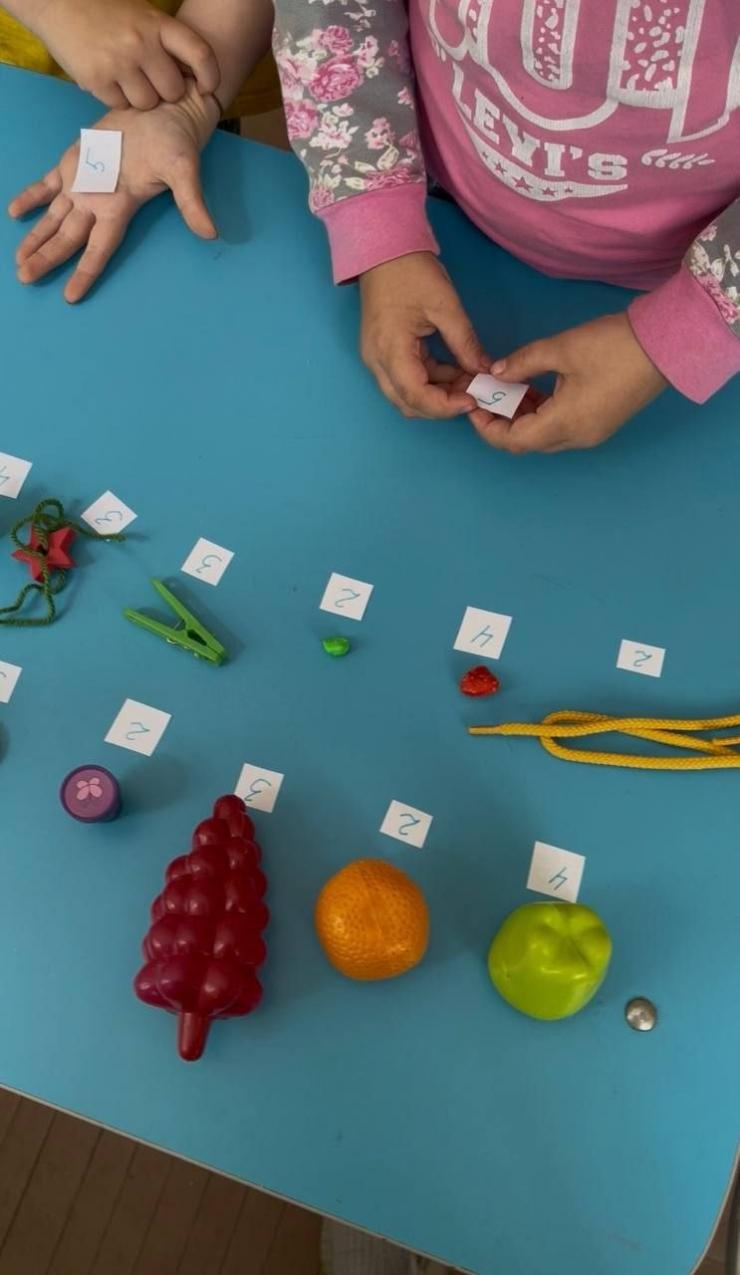
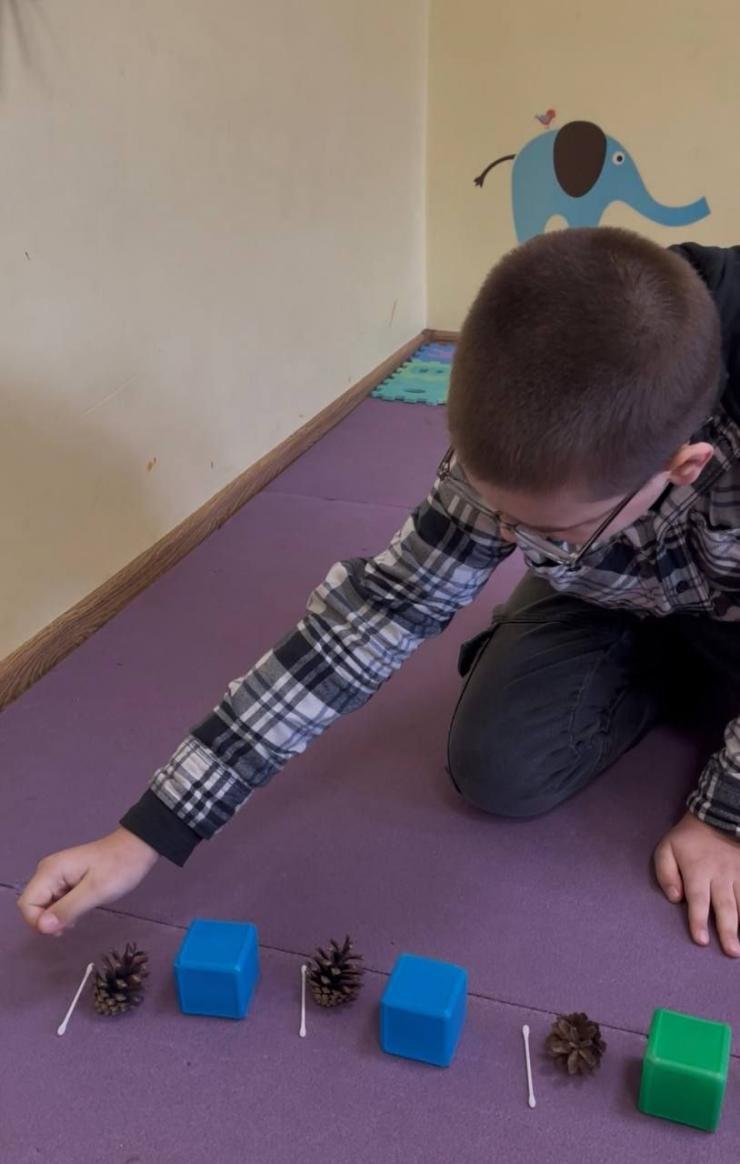
In my work, I rely on the so-called “motor development pyramid.” The first level is gross movements (general praxis), the second is fine motor skills (finger and hand praxis), and only the third level is articulation and speech. If the first two levels are not sufficiently formed, then difficulties arise at the speech level as well.
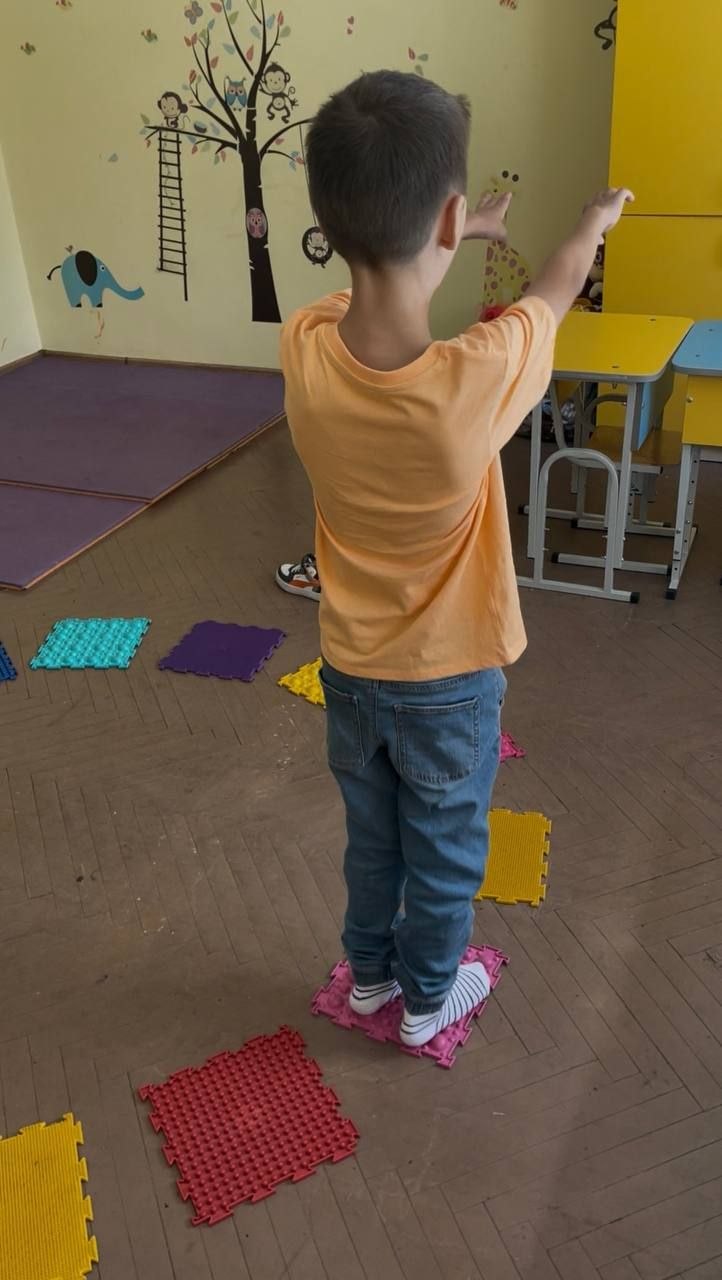
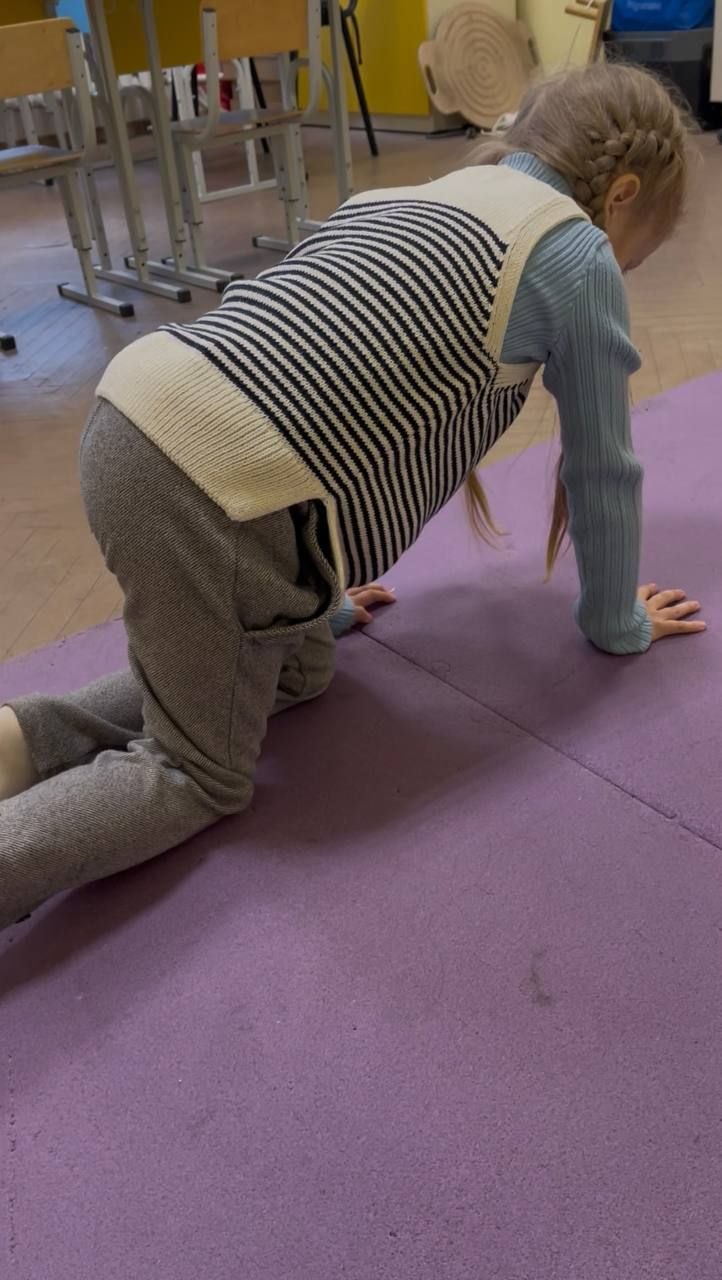
Movement is a powerful tool for our corrective work. That is why when a child with speech disorders comes to me, we often begin with basic things: crawling, coordinating arm and leg movements, and developing interhemispheric interaction. Sometimes a child can raise an arm, but cannot raise an arm and a leg simultaneously.
Today, speech therapy work has become much broader: we partly perform the functions of related specialists, defectologists, occupational therapists, and behavioral therapists.
Parents usually turn to a speech therapist because they see a speech problem. But speech is only the “tip of the iceberg.” And the “iceberg” itself will not be strong and whole if its lower part is sinking.
Therefore, in our work we do not limit ourselves only to speech, but go deeper, working with basic developmental processes: movement, coordination, and interaction of different body systems.
Work
- How effective are online classes compared to offline work?
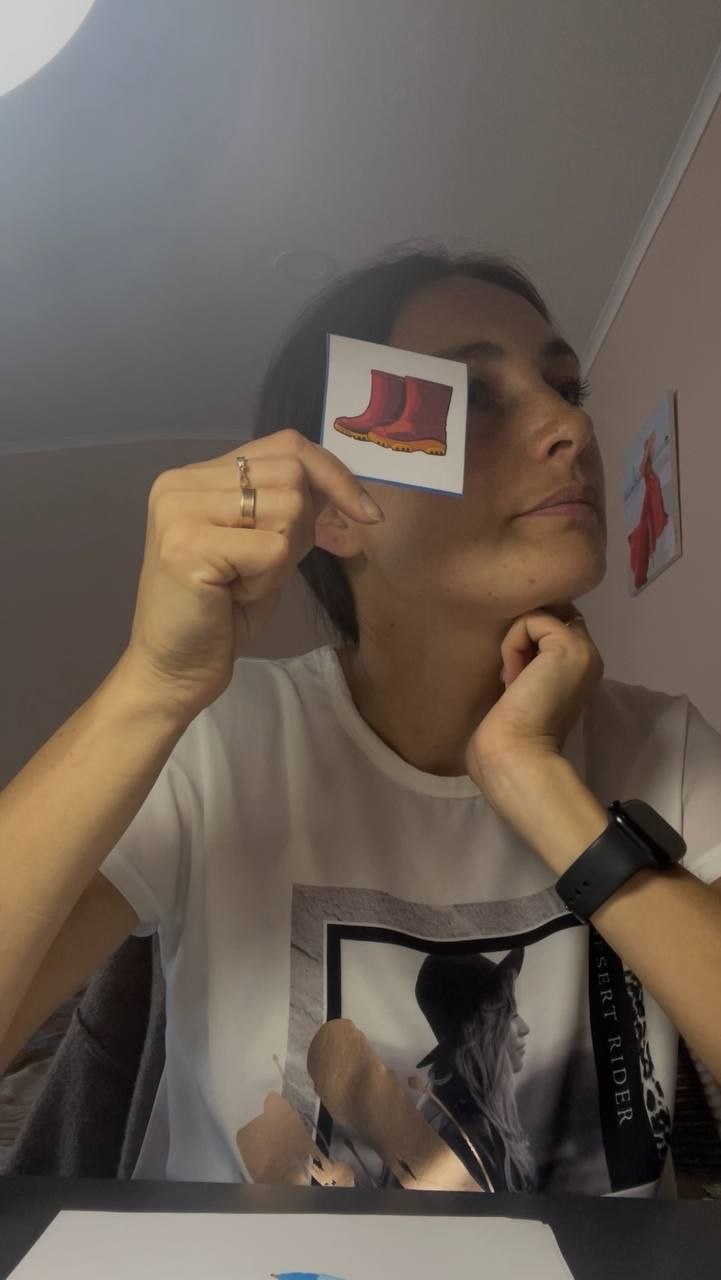
- The full-scale war forced me to switch to an online format. At first, it was not easy: through a screen, it is harder to keep a child’s attention, and there is no possibility of direct interaction. But over time, experience came, along with understanding of tools and approaches, and today I confidently conduct classes both in speech therapy and school preparation.
In parallel, I constantly learn new methods and know many techniques that help maintain children’s attention during online lessons. I can say that now the effectiveness of online work is on par with offline, and sometimes even exceeds it. This is especially relevant for children in settlements where there are no specialists, or for large cities where traffic jams and lack of time make in-person classes difficult. Online practice shows very good results and allows work to continue in any conditions.
Kateryna Ovsiannikova
- In your practice, you also note that you prepare children for school not by classical methods. What is distinctive about your approach?
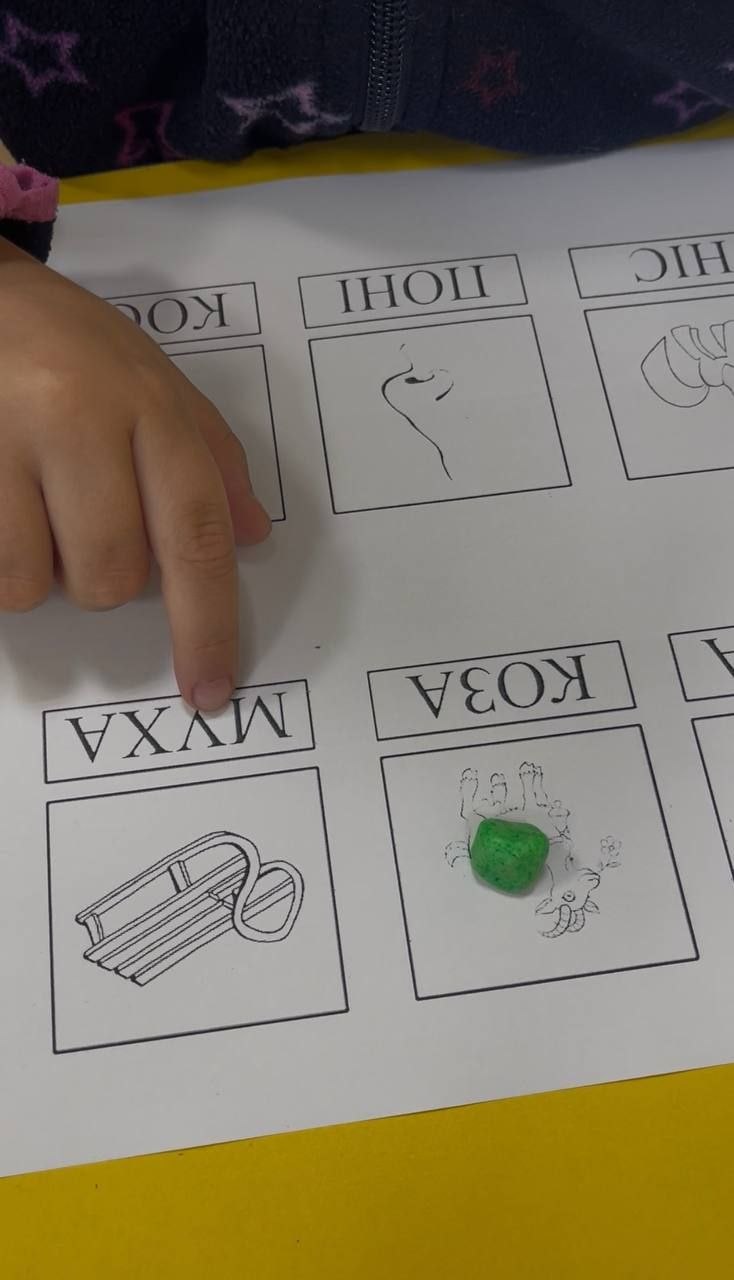
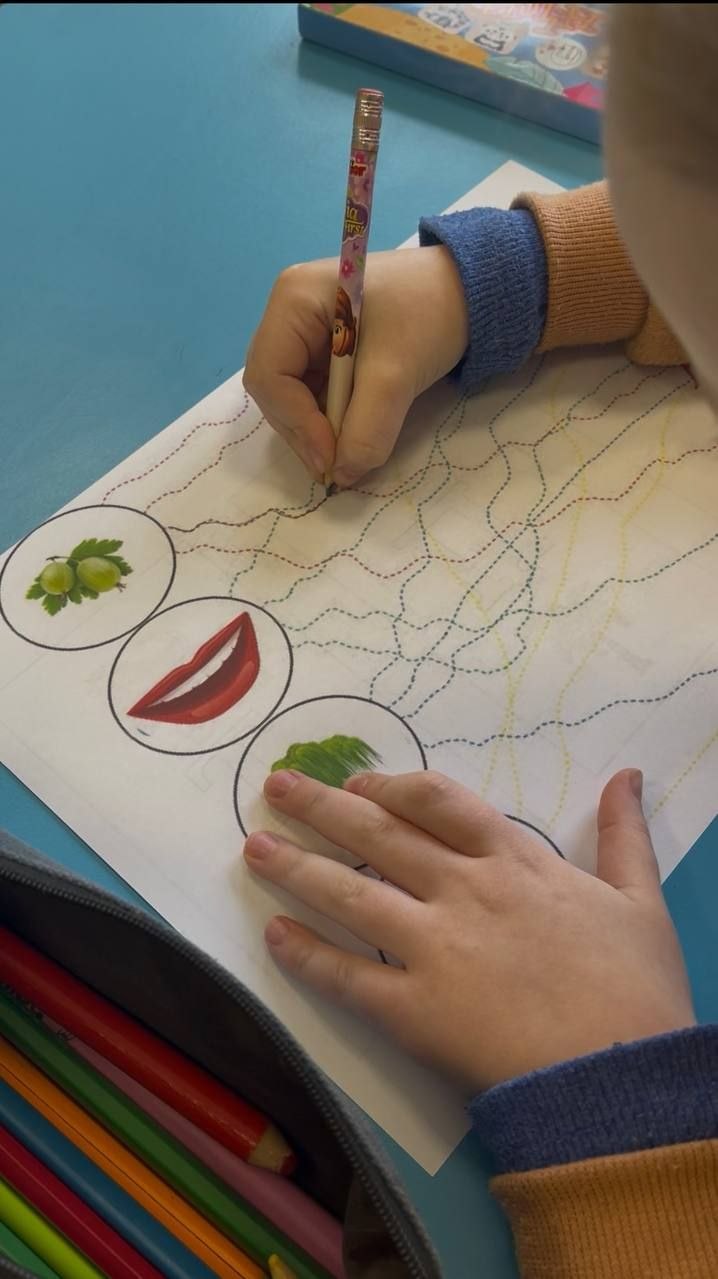
- In my practice, I truly use a school-preparation approach that goes beyond classical methods. Today there are many children who, even while studying at school, have speech difficulties, and unfortunately not all parents notice this in time. Therefore, during school-preparation classes I combine learning tasks with elements of speech therapy support. For example, while learning letters or working on handwriting, we simultaneously do articulation exercises, fine motor development tasks, train attention switching, and work on phonemic perception development.
Thus, the child receives not only basic knowledge for school, but also additional speech support. This is especially important because many children attend school-preparation classes but do not work separately with a speech therapist.
Of course, such classes do not replace full speech correction, since they have different primary goals. However, they help lay an important foundation and support the child’s development in a timely way.
Work
- You are the author of the training course for speech therapists “Start of Change.” Please tell us about this project: what problem does it solve, and what knowledge and skills do participants gain?
- I launched the “Start of Change” course for speech therapists on February 2. The idea took shape gradually. I worked toward it for a long time, studied, accumulated practical experience, and at a certain point realized that I wanted to pass this knowledge on to others, to be a mentor for those who lack confidence and a clear system in their work, for specialists who have just graduated from higher education institutions, for those with little work experience, and for those who simply want to get acquainted with other approaches to work. The main problem the course solves is the lack of systematization. Specialists often have fragmented knowledge; they are familiar with different methods but do not understand how to combine them into coherent and effective work. Many also get confused in differentiating speech disorders and do not fully possess the skills of high-quality diagnostics. In my course, I pay special attention to this, because diagnostics is the key stage of work: about 70% of further correction effectiveness depends on correctly identifying the disorder. If a specialist clearly understands the problem, they can bring a child to results much faster.
In addition, participants learn how to build a correction route, work with different types of speech disorders, and correctly prepare a speech therapy profile.
I am open to communication and place special emphasis in my work on practice. Theoretical knowledge can be obtained from textbooks or lectures, but practical experience is shared much less often, and this is exactly what specialists often lack most. Therefore, in the course I share the maximum number of practical tools, cases, and my own developments. My task is to give participants not just knowledge, but confidence in their actions. I want specialists, after training, not to be afraid to work with complex cases, to work with children with various speech disorders, and not to refuse parents because of lack of experience or uncertainty.
My course is not about separate topics, but about a comprehensive approach: from understanding speech disorders to building corrective work and properly preparing a speech therapy conclusion.

Kateryna Ovsiannikova
- In fact, with this in mind, you actively run a professional blog to share your knowledge and highlight important things for colleagues?
- Yes, I launch free marathons to share my experience and make specialists’ work a little easier. Now children have become much more complex in practice, and unfortunately it is no longer possible to correct speech in three months, or even half a year, as it used to be.
Work
- Has the blog influenced the development of your professional activity?
- One hundred percent, it has. I became more open in front of the camera and started spending much less time on filming. On the other hand, when the blog began to grow and an audience appeared, including colleagues, I felt even greater responsibility. Some write words of gratitude, some ask for advice, and this strongly motivates me to keep developing and deepen my expertise. I am very glad that I can be useful. This is exactly what inspires me to work and create more.
Work
- You developed the course “How to Turn On Attention, Energy, and Control in 25 Sessions”: for what audience is it designed, and how is the learning process structured?
- The course “How to Turn On Attention, Energy, and Control in 25 Sessions” has a broader format than purely speech therapy and is based on a neuropsychological approach. It is designed for children with various developmental difficulties: not only speech disorders, but also for those who tire quickly, do not finish tasks, have hyperactivity, and difficulties with concentration and attention.
The course exercises are aimed at increasing neurodynamic indicators and compensating for missed stages of early development. Today, many school-age children have not mastered basic sensorimotor skills, for example crawling or understanding the mechanics of movement. The course helps “close” these gaps and build a foundation for further development.
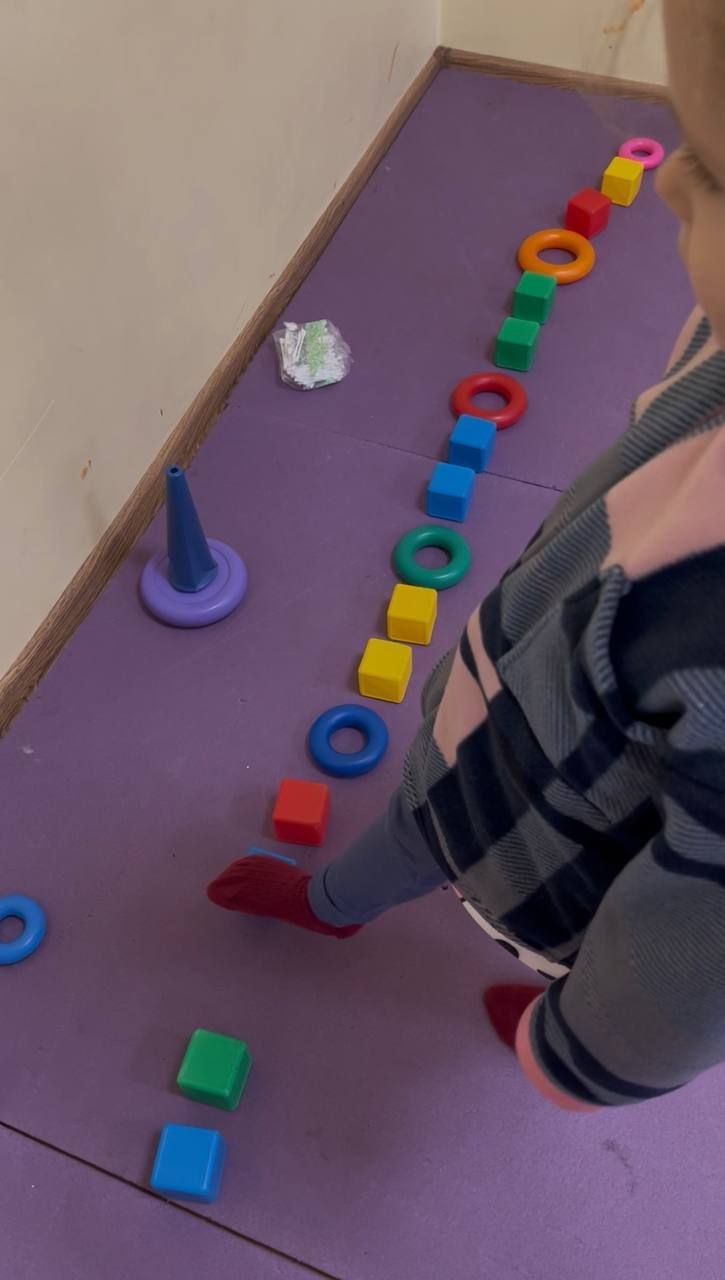
The learning process is structured in stages. First, the child masters motor skills, after which cognitive load is gradually added. Exercises are integrated with speech tasks: sound automation in words, vocabulary development, and formation of phonemic perception. In this way, comprehensive work is carried out with memory, thinking, attention, and speech.
The course is universal: it is suitable both for specialists and for parents who want to work with their child independently. Thanks to the flexibility of the exercises, they can be adapted to the individual needs of each child, which makes the program effective and practical in use.
Work
- What mistakes do parents most often make when they notice speech difficulties in a child?
- The most common mistake parents make is delayed consultation with a specialist. Many postpone it until the sensitive period of development is already partly lost. It is still possible to work with the child in such a case, but results are usually achieved more slowly and require more effort than with early intervention.
Another common situation is ignoring accompanying difficulties. When during classes it is clear that a child has trouble maintaining attention, tires quickly, and cannot work within the structure of a lesson, this often indicates broader neuropsychological or neurological characteristics. In such cases, a speech therapist recommends consulting related specialists, a neurologist, psychiatrist, or neuropsychologist. However, parents often do not take these recommendations seriously and limit themselves only to speech therapy correction. This significantly slows progress, because some causes of the difficulties remain unaddressed.
Underestimating speech disorders is also a mistake. Some parents send a child to school with unformed sound pronunciation, considering it an “individual trait” or hoping the problem will disappear on its own. For example, a guttural “r” is sometimes perceived as an individual feature rather than a disorder that needs correction.
In general, the effectiveness of support largely depends on timely consultation, parents’ readiness to work on the problem comprehensively, and adherence to specialists’ recommendations.
Work
- What three main pieces of advice could you give to parents who are worried about their child’s speech development?
- First, do not delay contacting a speech therapist. If at age 2 a child is still not speaking in phrases, that is already a reason for consultation. It should be a routine visit if “red flags” appear. The next important stage is at age 5, before school. Timely consultation significantly increases correction effectiveness.
Second, trust the specialist and work as a team. It is important to listen to the recommendations of the specialist working with the child. The result is always a joint effort of three sides: the child, the specialist, and the parents. Without this interaction, progress will be much slower.
Third, practice regularly at home. You should not place all responsibility only on the speech therapist. Sessions with a specialist usually take 2-3 hours per week, and without reinforcement at home, results will be limited. Just 10-15 minutes of daily practice is enough to significantly speed up progress. The key is consistency: regular practice gives stable results.
Marta Netiukhailo