


In the summer of 2022, Siverskodonetsk in Luhansk Region became a place of street fighting. For about a month, servicemen of the 81st Separate Airmobile Brigade — battalion chief of staff Vadim, alias Leon, and grenade launcher Bohdan, alias Bodia — spent time in the very epicenter of urban clashes. In an interview with Suspilne Bayka, they shared their memories of what the city's defense looked like from the inside, when the distance to the Russian occupiers was measured in tens of meters. About the defense of Siverskodonetsk — in the material Suspilne Donbas.
In the summer of 2022, Bohdan, under the pseudonym "Bodya", defended the city for about a month. He remembers both the city itself and the street battles.

Bohdan is a serviceman of the 81st Ukrainian Airborne Brigade. Social Donbas/Olexander Buryak
“In Siverskodonetsk, we encountered dense urban development. There were both country estates and high-rise buildings. There I already understood the whole essence of street fighting. These were fairly close clashes with the enemy at short distances. And, accordingly, it was quite tough.
I was struck by the fact that there was quite a lot of local population there, who had not yet evacuated at that time. Accordingly, they made certain moments difficult for us. And in general, I was surprised: why they had not evacuated yet, because sometimes there were children and old people there.
"The enemy at that time probably outnumbered us. He was constantly carrying out assault operations," said Bohdan, a serviceman of the 81st OAEMB.
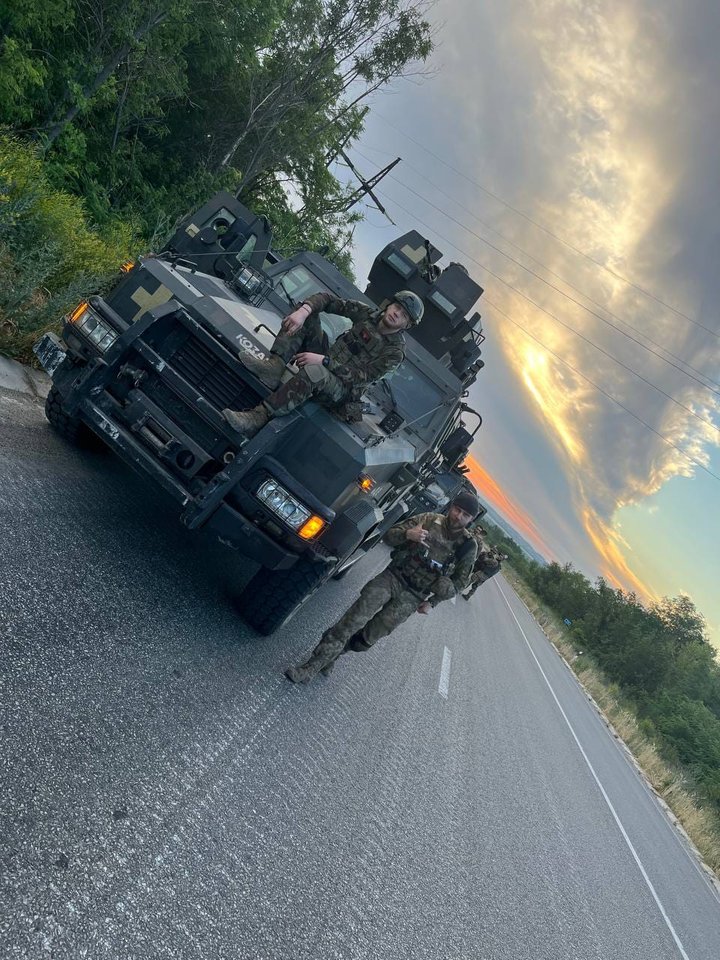
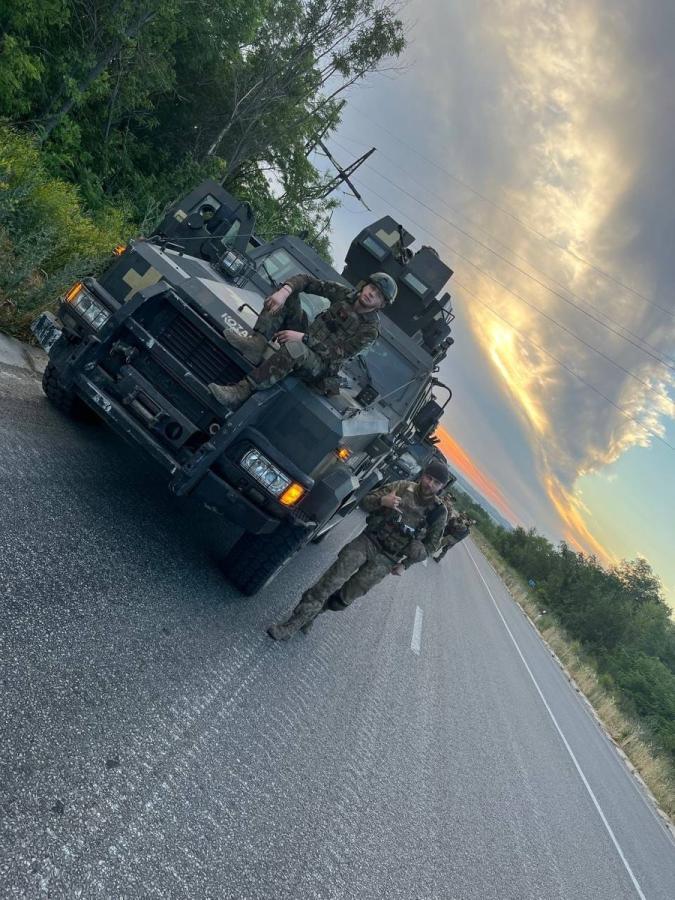
Defense of Siverskodonetsk. Photo from Bohdan's personal archive
We had to defend ourselves in residential buildings, says Bohdana's comrade Vadym. Both hastily mobilized from the occupied territories and regular Russian soldiers fought against the Ukrainian fighters.

Vadym is a fighter of the 81st OAEMB. Social Donbas/Olexander Buryak
“What I remember is how Russian tankers came to us, let's say, to do reconnaissance right under the company command post. Petrovich was there, the tank commander, and his driver, and the gunner stayed to guard the tank. And they came both drunk. One was wounded during a gunfight, and the other was wounded. And we dragged this wounded Petrovich.
I see that he has a leg, he is wounded in the leg, I see that blood is really flowing. I take the scissors, let's cut his pants. As soon as he started screaming, I thought that we will cut him here,” recalls Vadim, a serviceman of the 81st OAEMB.

Vadym, alias "Leon," participated in the defense of Siverskodonetsk. Social Donbas/Olexander Buryak
One day, Vadim and his comrades almost fell into a trap set by the Russians.
“I go into these houses, I look - the National Guard is standing there. And the National Guard was really standing there. I knew about it, that it was standing there. And if everything was fine, until the person who spoke to me returned, I did not see the St. George ribbon on it.
I started shooting in the house. My guys couldn’t understand what was happening at all. They thought something was wrong with me. Then the house came to life, and we took the fight in these houses. And the houses were already with the enemy, they put on the uniforms of the National Guard and were already standing there,” Vadim said.
In recent days, the city's defense has shifted to the Azot plant.
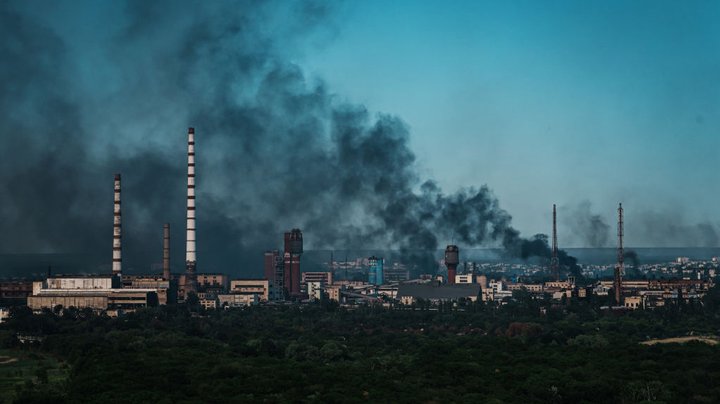
View of the Azot plant from Lysychansk. Photo: Marcus Yam/Los Angeles Times via Getty Images
“I remember when the tanks at Azot exploded.
And I hear the ground under my feet start to shake. Then there’s this explosion that just… Wow, everything fell apart. I thought they really hit us. Then I realize that no, something’s wrong here. And we only found out later from this cloud of smoke that was standing. It all went up, blew away all the roofs. And we only found out later that the barrels had burst. The crater there was such that, well, I don’t know, you could have thought that an atomic bomb had been dropped there,” Vadim recalls.
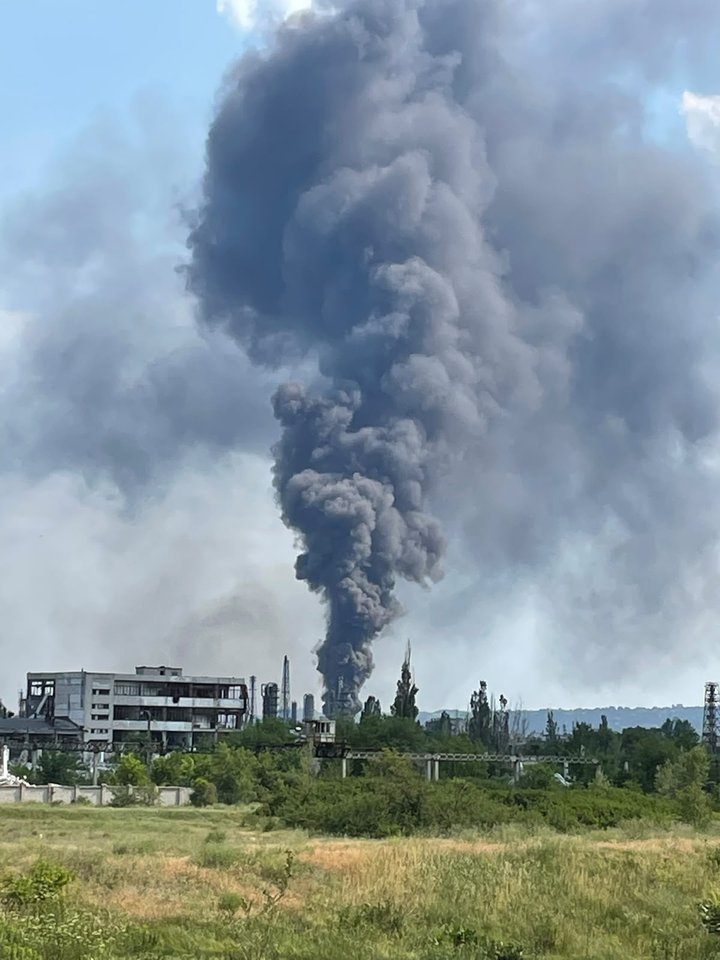
Battles for Siverskodonetsk. Photo from Bohdan's personal archive
At the end of June, an order to withdraw was received, but the bridge over the Seversky Donets was destroyed.
“I didn’t believe that we would be able to cross this river, because the bridges had already been destroyed. Well, instead, under cover of night, everything worked out for us. Back then, the history with drones wasn’t that developed. And, in principle, we managed to slip away unnoticed, plus or minus. And it’s hard to call them boats. We had some improvised rafts made of canisters. So we swam across on them,” said Bohdan.

Bohdan, alias "Bodya," participated in the battles for Siverskodonetsk. Social Donbas/Olexandr Buryak
Vadym drew attention to the fact that during the withdrawal of Ukrainian troops, the Russians did not prevent the defeat.
"The enemy did not inflict any fire damage at all. This can only be explained by the fact that they never found out that we were leaving. They were unable to redeem themselves. They fought with empty basements for two more days."
The defense of Siverskodonetsk gave the Ukrainian army precious time to mobilize forces and prepare for future counteroffensives, Vadym believes.
“And we knew that if we inflicted such losses on him, we would retreat, but inflict losses on him — to the point where he could no longer move, he would have no strength. And then we would be able to move.
This, in the aggregate of each military unit, each unit of the Armed Forces, the National Guard and the rest of the units, gave its result only later. That is, the Kharkiv counteroffensive already showed afterwards that the enemy was exhausted. He no longer has the strength to continue conducting offensive actions. And we were already conducting offensive actions,” says Vadim, a serviceman of the 81st OAEMB.
In total, the defense of Siverskodonetsk lasted 120 days — from the beginning of clashes on the approaches to the city in late February until receiving an order for the organized withdrawal of the Armed Forces of Ukraine units on June 24, 2022. The street battles themselves lasted about one month — the active phase of clashes in residential areas began in late May.