


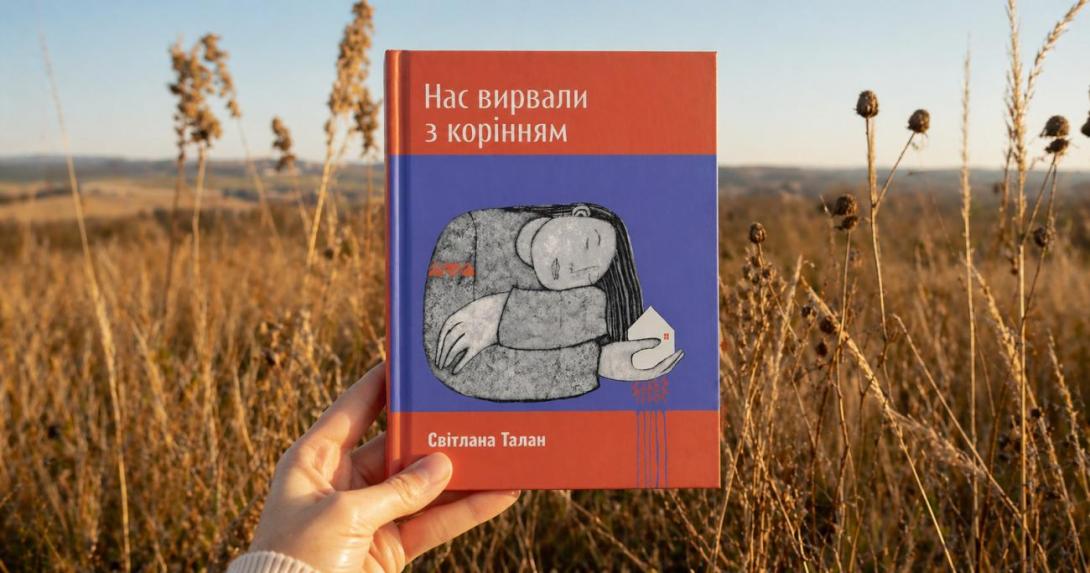
After 2022, literature in Ukraine has acquired a new volume, going beyond the boundaries of purely artistic writing. More and more often, it becomes a form of recording the experience of war, collective and at the same time deeply personal. Writer Svitlana Talan - a laureate of numerous literary prizes and awards, a member of the National Union of Writers of Ukraine and an honorary citizen of Siverskodonetsk - works precisely on this border: between the artistic word and living testimony.
After 33 years of living in Siverskodonetsk, Svitlana Talan, like thousands of her compatriots, found herself far from home. First in the Lviv region, then in Kyiv. But the feeling of "I'm home" never came.
The real experience of losing a familiar life, which was crumbling before our eyes, became the basis of the documentary novel “We Were Uprooted.” It contains 33 stories of Siverskodonetsk residents who survived the beginning of a full-scale invasion, life under occupation, and evacuation.
Svitlana Talan fundamentally does not edit these voices or soften their intonations, creating a document of time - about loss, endurance, and people who, despite everything, hold on to life and hope.
In a conversation with SD.UA, the writer talks about life after losing her home, why she keeps returning to painful topics (despite her own promises not to), and what human resilience looks like when everything familiar disappears. This is a conversation about the state in which hundreds of thousands of Ukrainians live: between memory and hope, loss and stubbornness to live on.
– Ms. Svitlana, congratulations! After the previous interview for SD.UA, some changes have occurred in your life – in particular, moving to Kyiv. How has the feeling of home transformed during this time? What does “being at home” mean to you now?
– After Lviv region, I have been in Kyiv for almost two years. The city attracts, surprises, and enchants, but, unfortunately, I still don’t feel like home. I think I won’t until I return to my native Siverskodonetsk, so that the city will let me go.
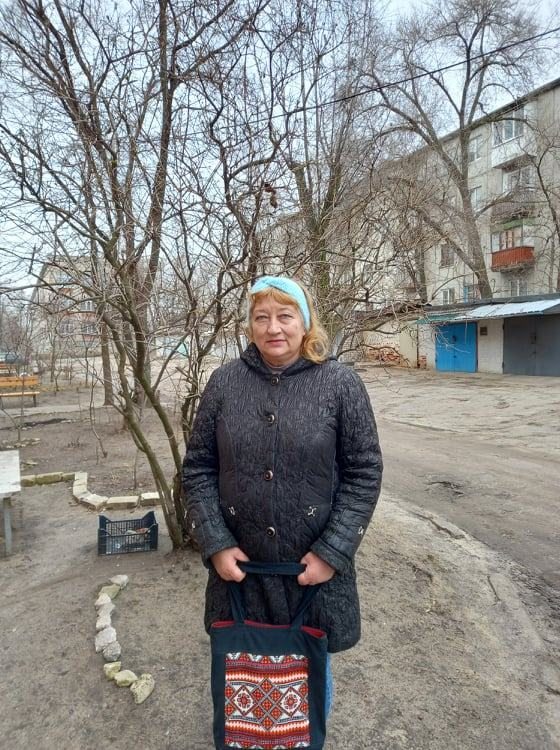
The last photo near the house in Siverskodonetsk, February 24, 2022. Source: Svitlana Talan's Facebook page
– You said that since 2022 you have been working harder than ever. In the current circumstances, this requires a lot of internal resources. Where do you get it from? What exactly helps you move forward?
– Only creativity and support from readers help me not to fall into depression. When I feel really down, I switch to work. I immerse myself in the world of my characters and thus distance myself from the troubles of today, from illnesses and despair from the loss of everything that was important in life. Readers' support, author meetings, travel, and outdoor recreation really help me to hold on and believe in the best.
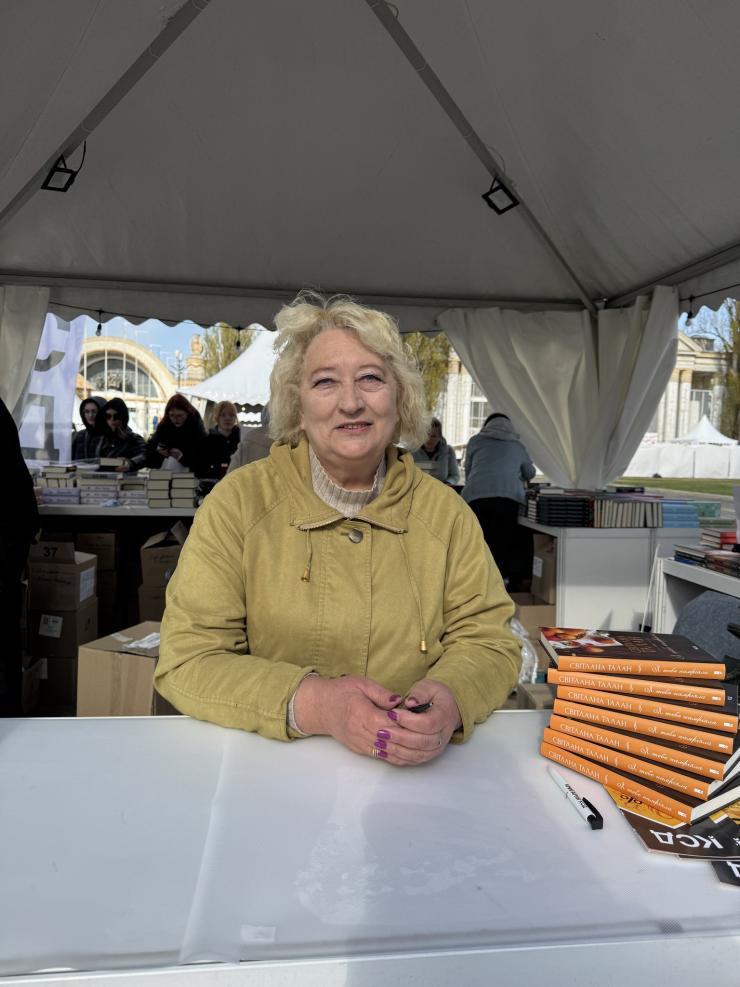
"Book Country" Festival at VDNH, April 2026. Source: Svitlana Talan's Facebook page
– You admitted that while working on books you sometimes cry because you take everything to heart. In the new novel “We Were Uprooted” – 33 real stories of Siverskodonetsk residents, their experience of life in the city from 02/24/22 until the moment of forced evacuation. How emotionally difficult was it for you to work on this book?
– When I was working on a historical novel about the Holodomor in Luhansk Region, it was morally very difficult, and then I gave myself a promise that I would no longer touch on such morally difficult topics, but life forced me. I could not help but recreate the events of 2014 in Siverskodonetsk in my works, and “The Naked Nerve” appeared. I thought that was it, the last book, which was morally too heavy for me, which survived the occupation, but again life made its adjustments. As an Honorary Citizen of the city, I had no moral right not to make a gift to my hometown for the anniversary, and then the idea arose to collect testimonies of fellow countrymen for a new book.
Now I don't know where I got the strength to endure morally, because each story is a return to those difficult times. It took me a year to collect material and write the book.
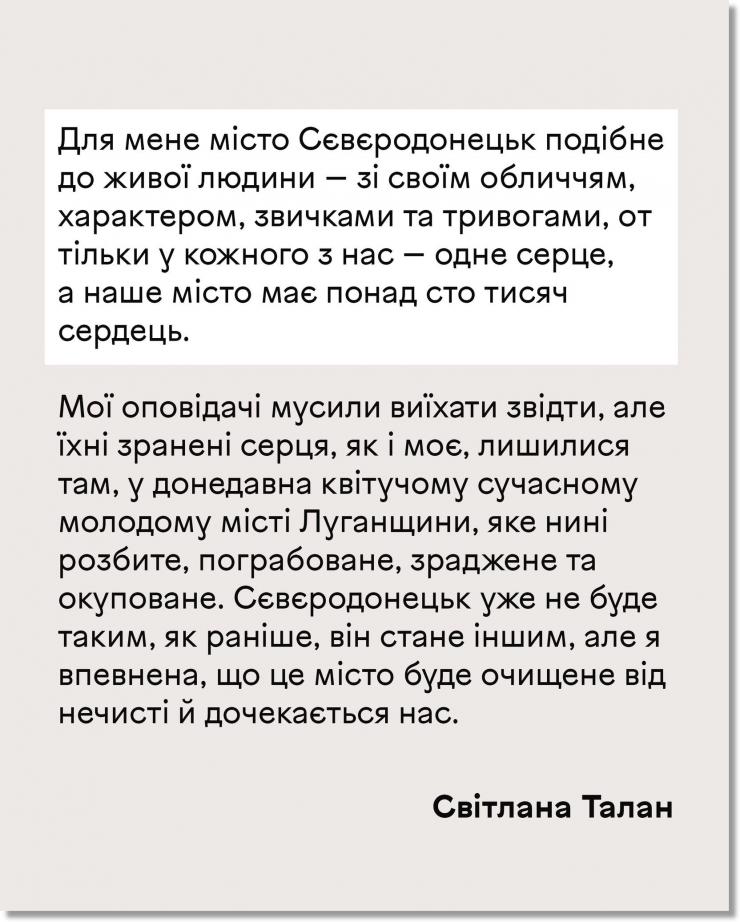
From the book by S. Talan "We Were Uprooted". Source: Facebook page of the publishing house "Bilka"
Learn more
News
history
book
– How did you collect these stories? Did you communicate with the characters personally and how difficult was it?
– It was very difficult! Firstly, we were scattered all over the world. Secondly, we often had to persuade and prove that we should leave memories of our city for history. I agreed to everything: stories in writing, in parts, over the phone, during personal meetings.
Not everyone agreed to go back to that time, because we supposedly remember everything, but when you start to recreate everything step by step, the pain hits you. Some willingly agreed to share their memories, but they never could. Someone immediately said that they didn't want to remember everything, they wanted to forget it as soon as possible.
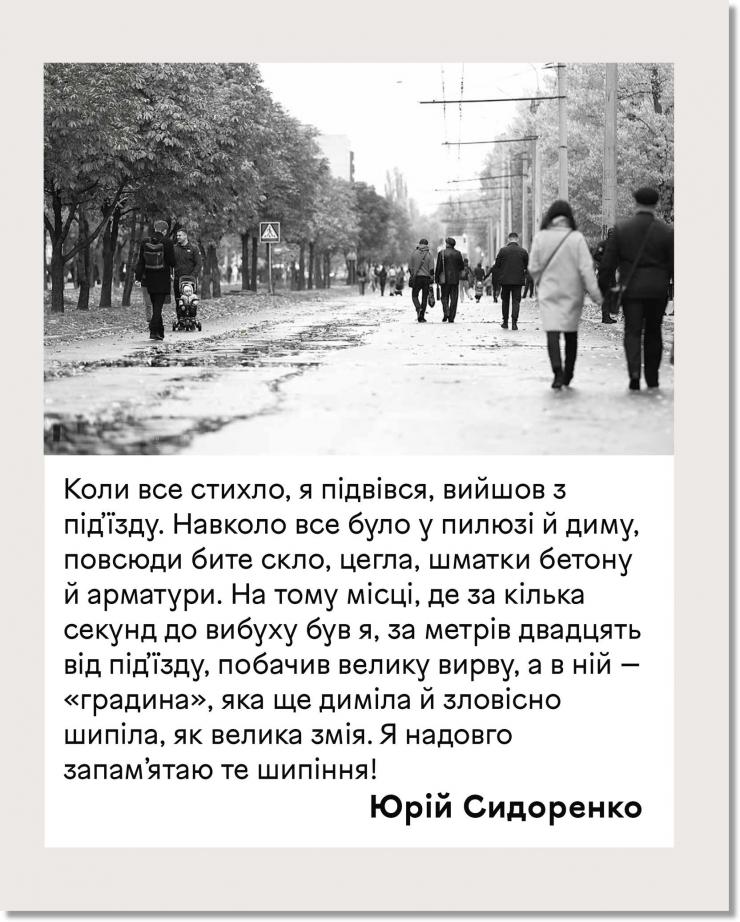
From the book by S. Talan "We Were Uprooted". Source: Facebook page of the publishing house "Bilka"
Learn more
Local news
books
Flora and fauna
– Since this is a journalistic novel, did you keep the names and surnames of the characters or did you change them to fictional ones?
– Some surnames had to be omitted at the request of the people. I know them personally, but for the safety of them or their relatives, the stories were signed as anonymous. There are no fictitious surnames.
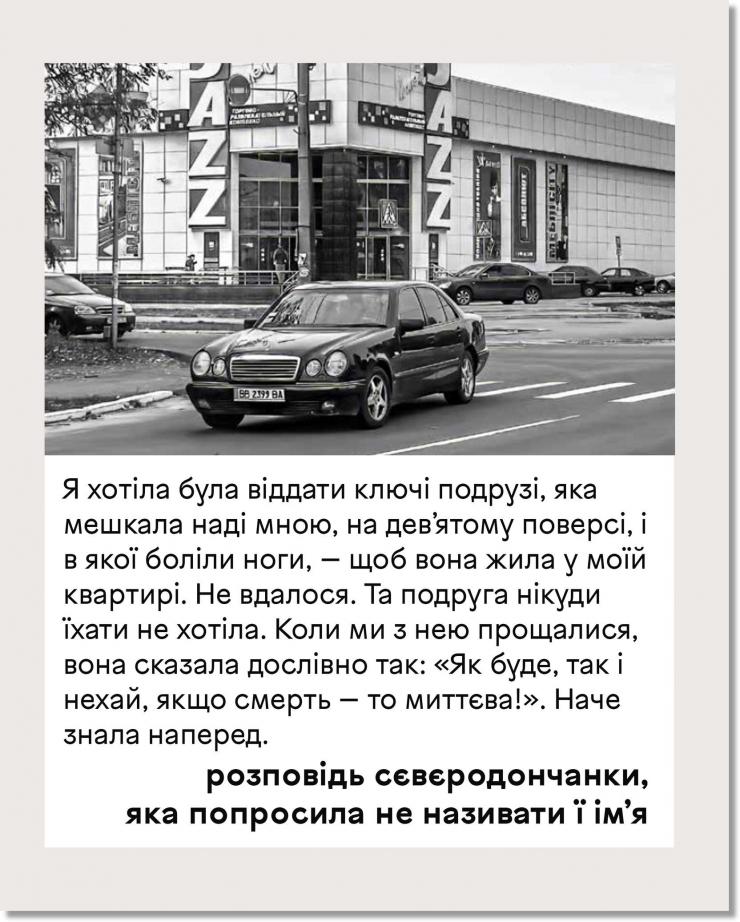
From the book by S. Talan "We Were Uprooted". Source: Facebook page of the publishing house "Bilka"
– Did you change anything in their stories? For ethics, safety, etc.?
– When I offered to share my memories, some people asked if I would remove anything from the text or change it. I immediately said that everything would remain uncensored. There is a note in the book that neither I nor the publisher is responsible for the stories.
– If we try to very briefly define the meaning of the book “We Were Uprooted”: is it more about loss or about survival?
– Most likely, it's about survival, resilience, and mutual assistance in difficult circumstances.
– How, in your opinion, can a person remain human during war?
– Don't get angry, don't lose the best human qualities: caring for your neighbor, love, faith.
– In your experience, do many people manage to pass this test?
– Not everyone is able to withstand the test of fate. Losing everything and often everyone at the same time is not something everyone can do, so we have to rally and stick together. When I meet Siverskodonetsk residents at author meetings or even on the street, it is such a joy, as if I had met a relative.
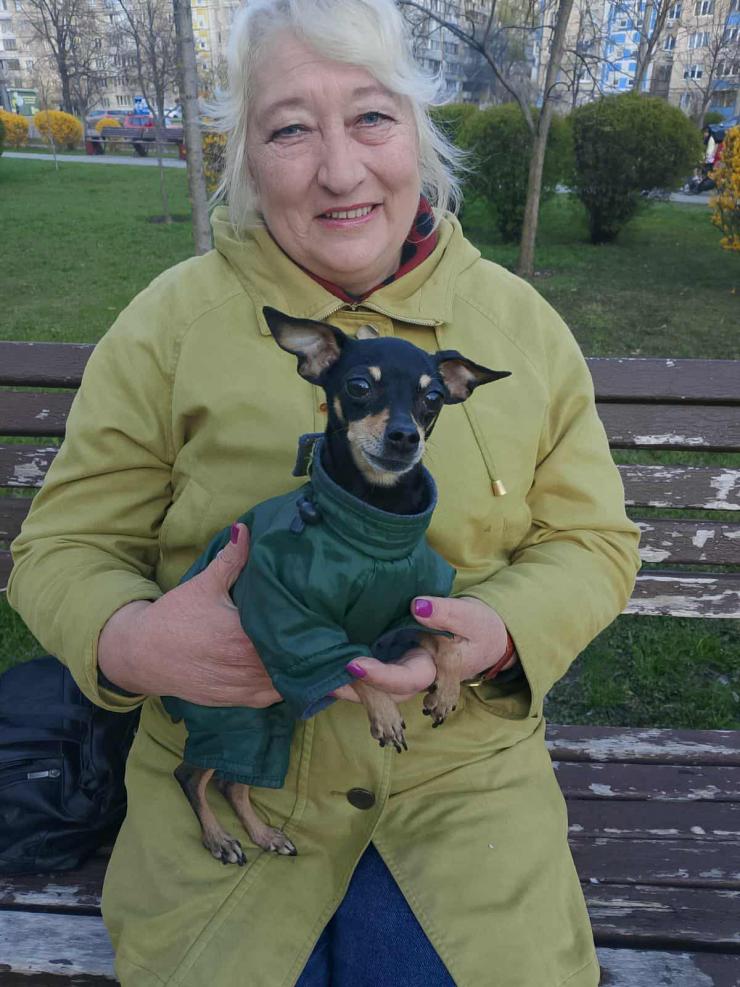
During a meeting with a fellow countrywoman from Siverskodonetsk and her puppy Archie. Source: Svitlana Talan's Facebook page
– What can help a person who has been “uprooted” to start anew? Is he able to regain the strength that was taken from him?
– We, the immigrants, are like a plant that was forcibly uprooted and transplanted to a new place. The plant gets sick, clings to life with all its last strength, because, despite everything, it wants to live. Sometimes it bends to the ground, no longer able to hold on, but a nourishing rain falls - and it comes to life again. It's the same with us. With my book, I wanted to show those people who cry because there is not enough light in the house or because prices are creeping up, what they did not survive and what they managed to avoid.
Displaced people are the greatest optimists, living in the hope of returning home. They often say, "I will definitely return home," even when all that is left of their home is a charred wreck.
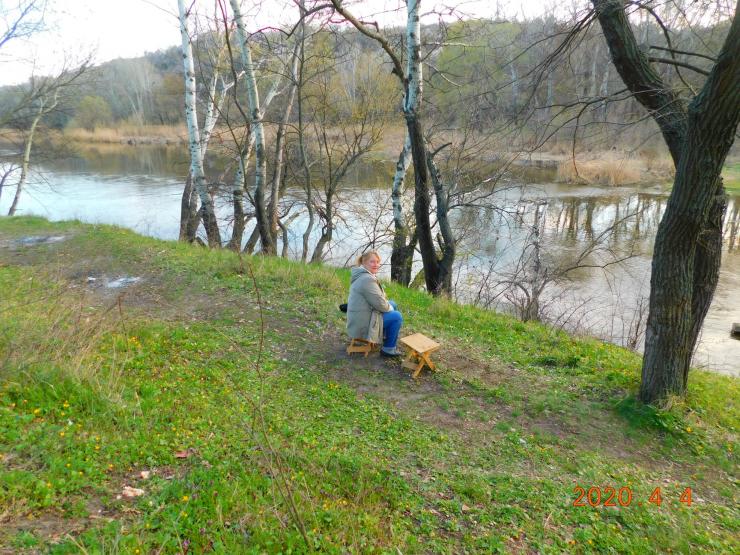
Spring on the Seversky Donets, archive photo. Source: Svitlana Talan's Facebook page
– Finally, what advice would you give to the characters in your book and our readers? Where can they find support and inspiration to cope with all the challenges with dignity?
– I want to wish everyone not to lose faith in themselves and in Victory. As long as it is alive, we live.
Tatyana Volska