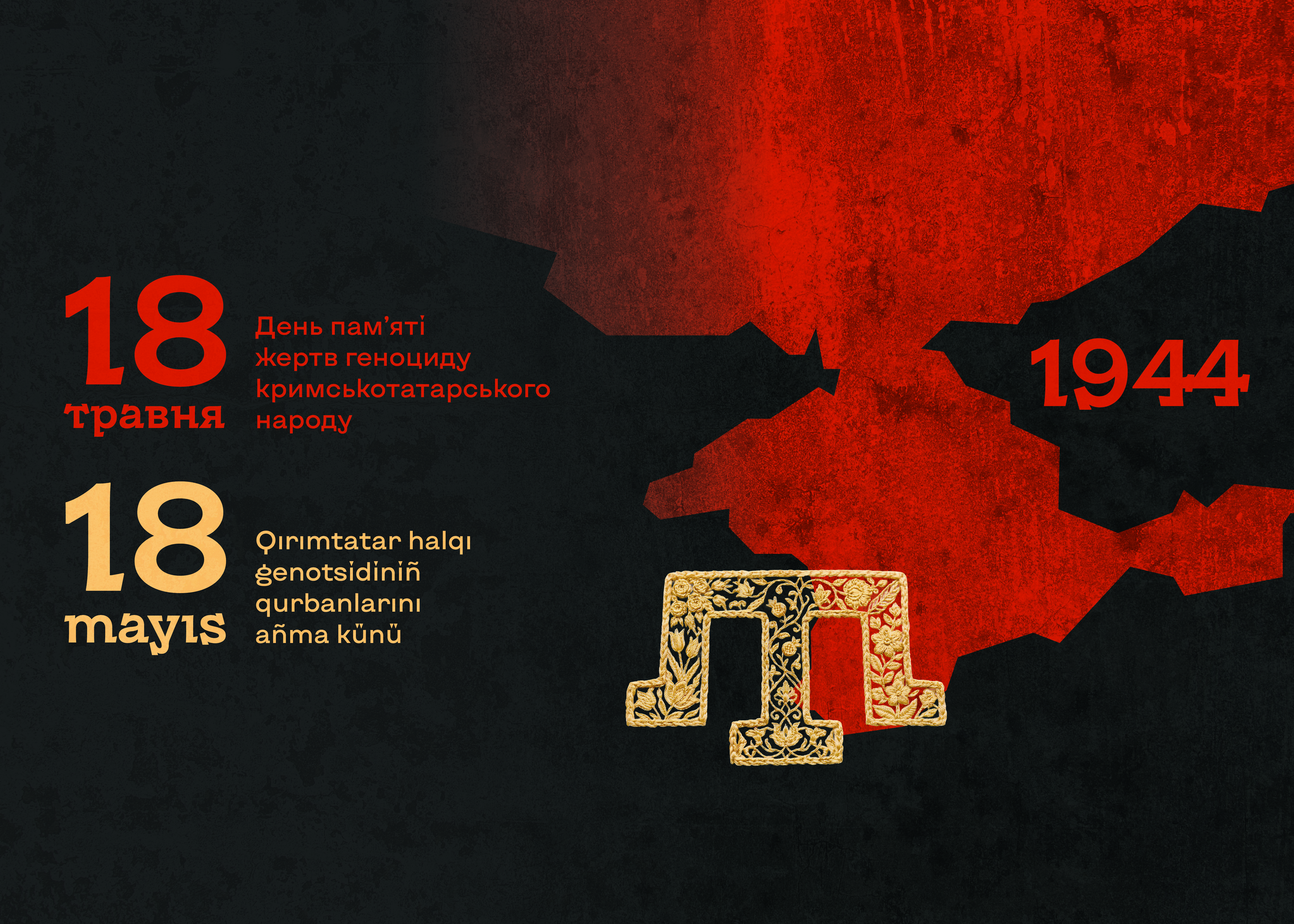

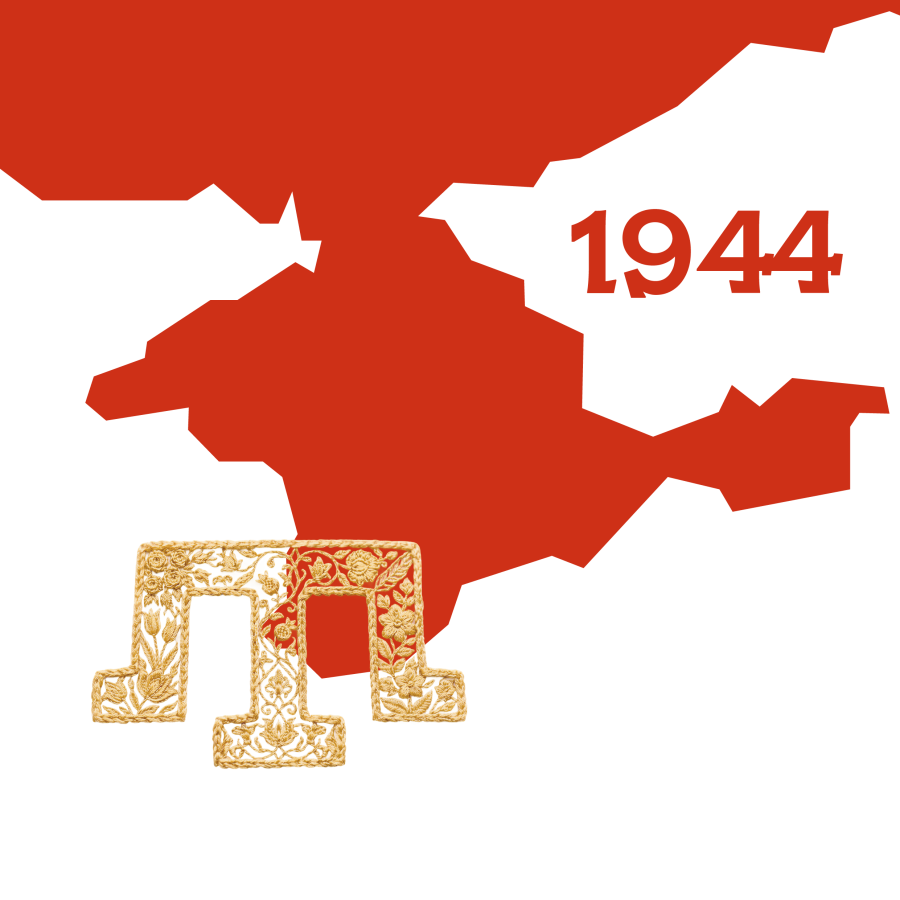
On May 18, Ukraine commemorates the Day of Remembrance of the Victims of the Genocide of the Crimean Tatar People—one of the most tragic pages in modern history. It was on this day in 1944 that the Stalinist regime began the mass deportation of Crimean Tatars from their historic homeland—Crimea.
This crime, which in its nature and consequences corresponds to the international definition of genocide, was an attempt to destroy the Crimean Tatar community as an indigenous people, erase its presence from the peninsula, and uproot its culture, language, and traditions. However, despite extraordinary losses, violence, and decades of exile, Crimean Tatars did not stop fighting for the right to live on their own land.
The current Russian occupation of Crimea in many ways reproduces the repressive policy of the Soviet era directed against the Crimean Tatar people.
To understand the scale of the tragedy and its causes, consequences, and significance for today, we invite you to review the historical brief prepared by the Office of the President of Ukraine in the Autonomous Republic of Crimea:
How the crime of genocide of the Crimean Tatar people was carried out on May 18, 1944, by the Soviet totalitarian regime
The deportation of the Crimean Tatar people—mostly children, women, and the elderly—by the Soviet totalitarian regime was the culmination of Russia’s colonial policy aimed at detatarization of Crimea. During hostilities, while men were at the front, the Soviet authorities treacherously drove children, women, and the elderly out of their homes and sent them into exile—a journey that became the last for many.
The State Defense Committee Resolution of May 11, 1944, signed personally by Stalin, completed the process of forcibly displacing the indigenous people from their own land, which had begun immediately after the annexation of Crimea by the Russian Empire in 1783.
At dawn on May 18, and in some localities on the previous day, May 17, the deportation of Crimean Tatars began. The personnel involved acted with brutality: the operation was carried out with the use of violence. In most cases, Crimean Tatars were not told what was happening, where exactly they were being taken, and were given no more than 15 minutes to prepare. Thus, Crimean Tatars left their homes unprepared for a long and exhausting journey, let alone for settling in a foreign land.
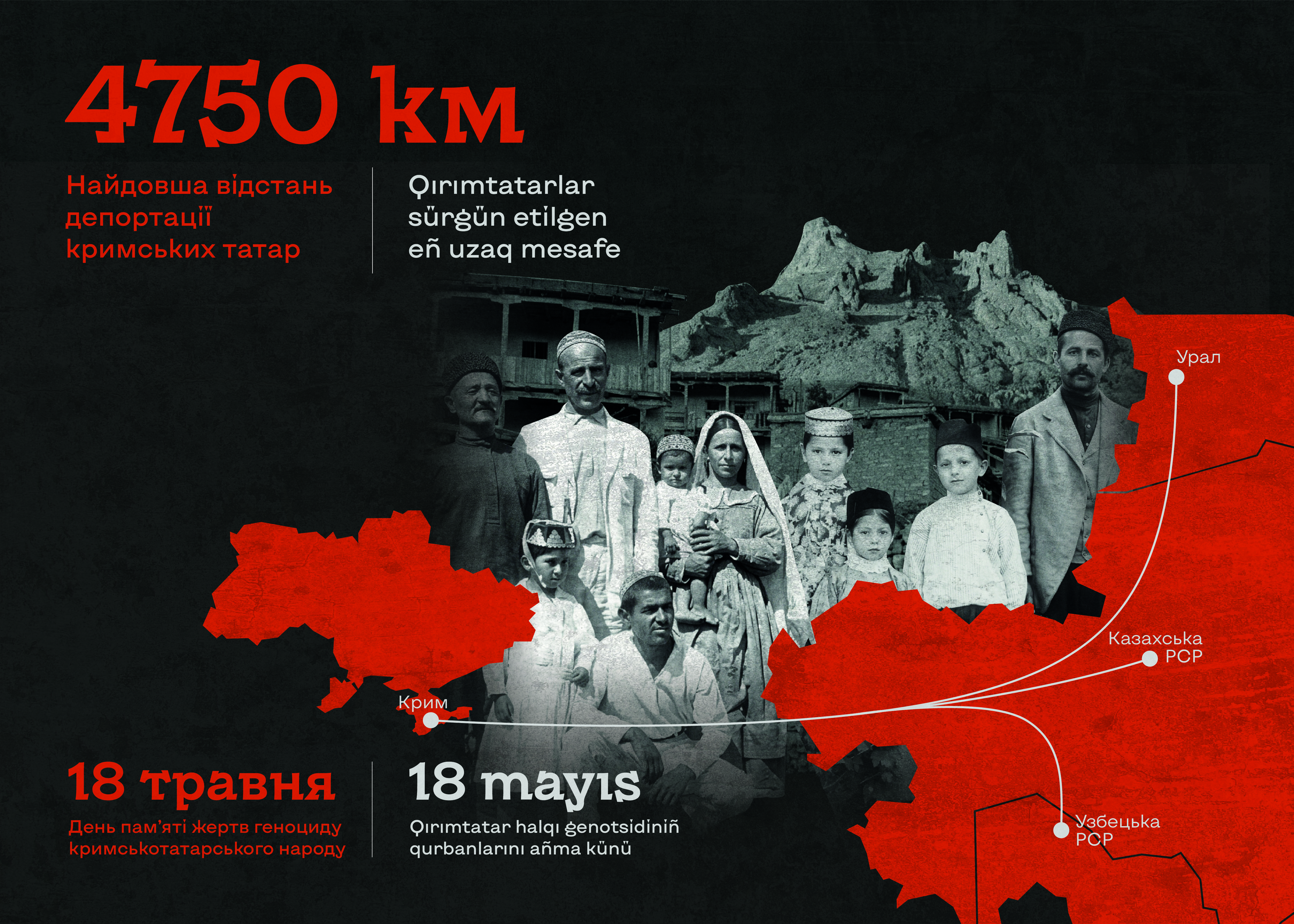
According to the Resolution, deportation was to be completed by June 1, 1944, but the Soviet repressive apparatus was once again used to “overfulfill the plan.” The Soviet regime carried out the deportation using a large number of repressive bodies—with the involvement of 23,000 NKVD soldiers and officers, 9,000 NKVD and People’s Commissariat of State Security operatives, 100 passenger cars, 250 trucks, and 67 train echelons. By 8 a.m. on May 18, 90,000 Crimean Tatars had already been loaded into 25 echelons consisting of freight cars. 48,400 Crimean Tatars in 17 echelons had already been deported to Uzbekistan. On May 19, another 165,515 Crimean Tatars were deported in freight cars. Ultimately, this pace allowed the executioners to report to Moscow as early as May 20 on the “cleansing” of Crimea from Crimean Tatars.
The deadly journey of deportees to special settlement locations in freight cars lasted on average 2–3 weeks. On the way, in cramped cars, without food, water, or medical care, 7,000–7,900 Crimean Tatars died from hunger and disease.
Crimean Tatars who were soldiers and officers of the Soviet army, after the end of World War II, were sent to places of deportation or labor camps; in total, this was nearly 9,000 Crimean Tatar soldiers and officers. It is worth recalling that during World War II, 21 Crimean Tatars were nominated for the “Hero of the Soviet Union” award, some more than once. For example, the title “Twice Hero of the Soviet Union” was awarded to the Crimean Tatar, outstanding pilot Amet-Khan Sultan (August 1943, June 1945). 5 Crimean Tatars received the title “Hero of the Soviet Union.”
Despite the fact that Uzbekistan was the final destination according to the State Defense Committee Resolution, echelons with deportees were also sent to special settlements in the RSFSR and the Urals:
▷ Uzbek SSR – 36,979 families (151,136 persons, incl. 73,506 children under 16)
▷ Mari ASSR – 2,115 families (8,597 persons, incl. 4,137 children under 16) ▷ Gorky Oblast – 1,204 families (5,095 persons, incl. 2,506 children under 16)
▷ Ivanovo Oblast – 596 families (2,800 persons, incl. 1,540 children under 16)
▷ Molotov Oblast – 2,443 families (10,555 persons, incl. 5,484 children under 16)
▷ Yaroslavl Oblast – 300 families (1,059 persons, incl. 445 children under 16)
▷ Sverdlovsk Oblast – 1,005 families (3,594 persons, incl. 1,501 children under 16)
▷ Kemerovo Oblast – 2,147 families (6,743 persons, incl. 1,949 children under 16)
▷ Kazakh SSR (Guryev Oblast) – 1,096 families (4,286 persons, incl. 1,483 children under 16).
Thus, a total of 47,885 families were deported (193,865 persons, incl. 92,553 children under 16). As noted in an NKVD document, “of them employed: men – 26,092, women – 50,481, children – 14,614, total – 91,187.” This figure did not include nearly 6,000 imprisoned Crimean Tatars sent to the Gulag directly during deportation.
NKVD USSR directives No. 1/21826 of November 16, 1944 and No. 1/1559 of August 12, 1945 categorically prohibited “sending demobilized Crimean Tatars, Crimean Bulgarians, Greeks, Armenians from the Red Army to the territory of the former Crimean ASSR.” Defenders of the homeland found their families already in special settlement locations. The total number of Crimean Tatars deprived of their homeland, including Ostarbeiters and men demobilized from the Red Army after the war, amounted to 207,111 Crimean Tatars.
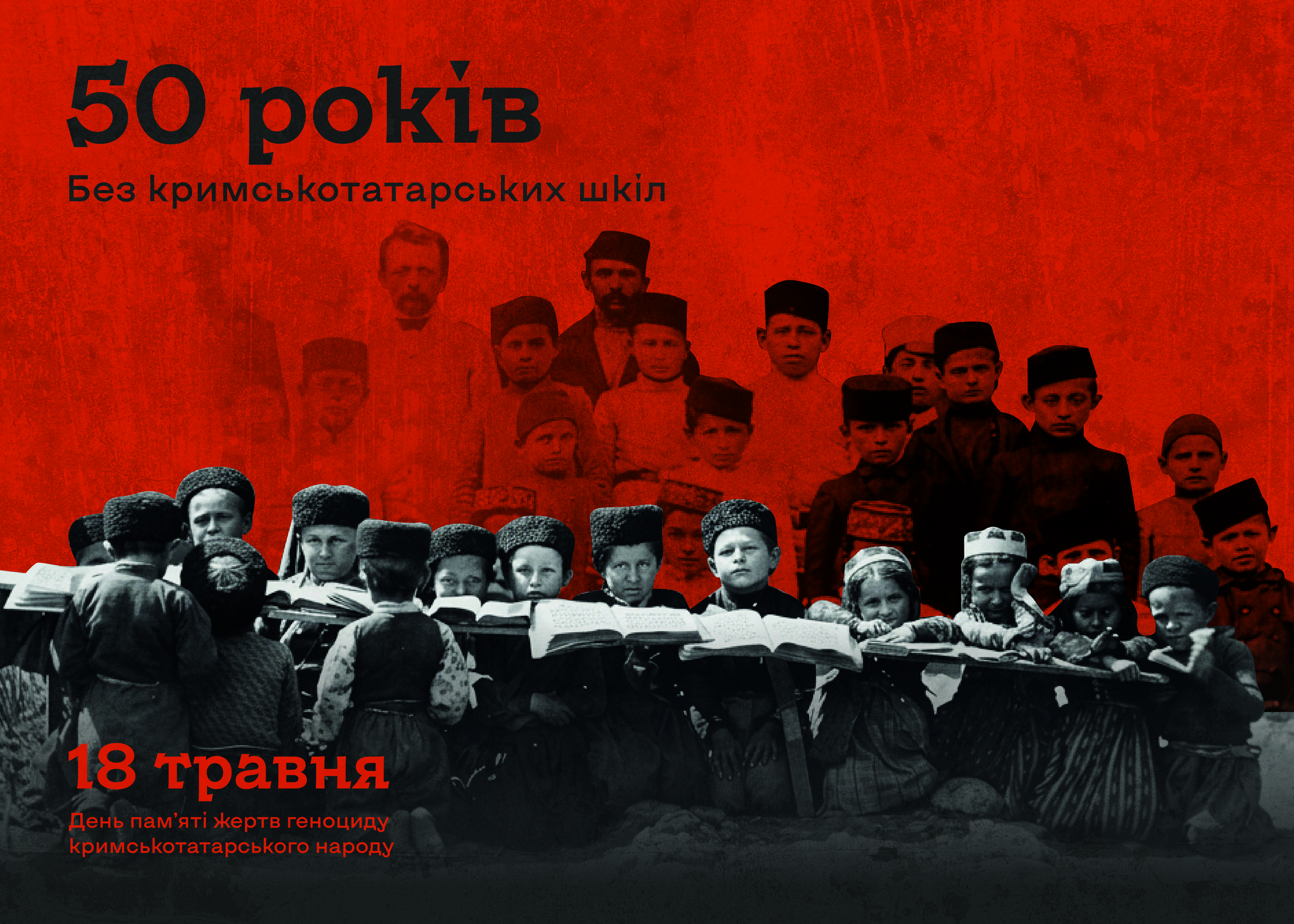
Deported representatives of the indigenous people were assigned the status of “special settlers.” This meant constant surveillance by Soviet repressive structures, registration at commandant’s offices, and forced physical labor in exhausting jobs. The labor was hard, especially for special settlers weakened by hunger and disease. Their children could not attend school due to lack of shoes and clothing. According to the Special Settlements Department of the NKVD of the Uzbek SSR, in the six months of 1944, that is, from arrival in the Uzbek SSR to the end of the year, 16,052 people died (10.6%), and in 1945 – 13,183 (9.8%). Thus, in the first year and a half, about 30,000 Crimean Tatars died.
According to the NKVD of the Uzbek SSR, during the first half-year of deportation, 16,052 Crimean Tatars (10.6%) died from disease and inhumane conditions, and in 1945—13,183 (9.8%). In Uzbekistan alone, nearly 30,000 Crimean Tatars died during the first year and a half of deportation. In some regions of Uzbekistan, mortality among deportees exceeded 60–70%. According to approximate calculations of the National Movement of the Crimean Tatar People, the number of those who died in exile is significantly higher.
In 1948, the regime in special settlements became even more repressive. In particular, leaving special settlements was punishable by arrest for 5 days, and repeated violation of the “residence regime” was considered an “escape from exile,” leading to imprisonment for 20 years.
The genocide was also reflected in actions by the Soviet regime to erase memory of Crimean Tatars from the history of the Crimean peninsula: Crimean history was revised, Russian imperial narratives about an “eternally Russian” Crimea were introduced, and myths in the context of a “traitor people” were deliberately and massively spread.
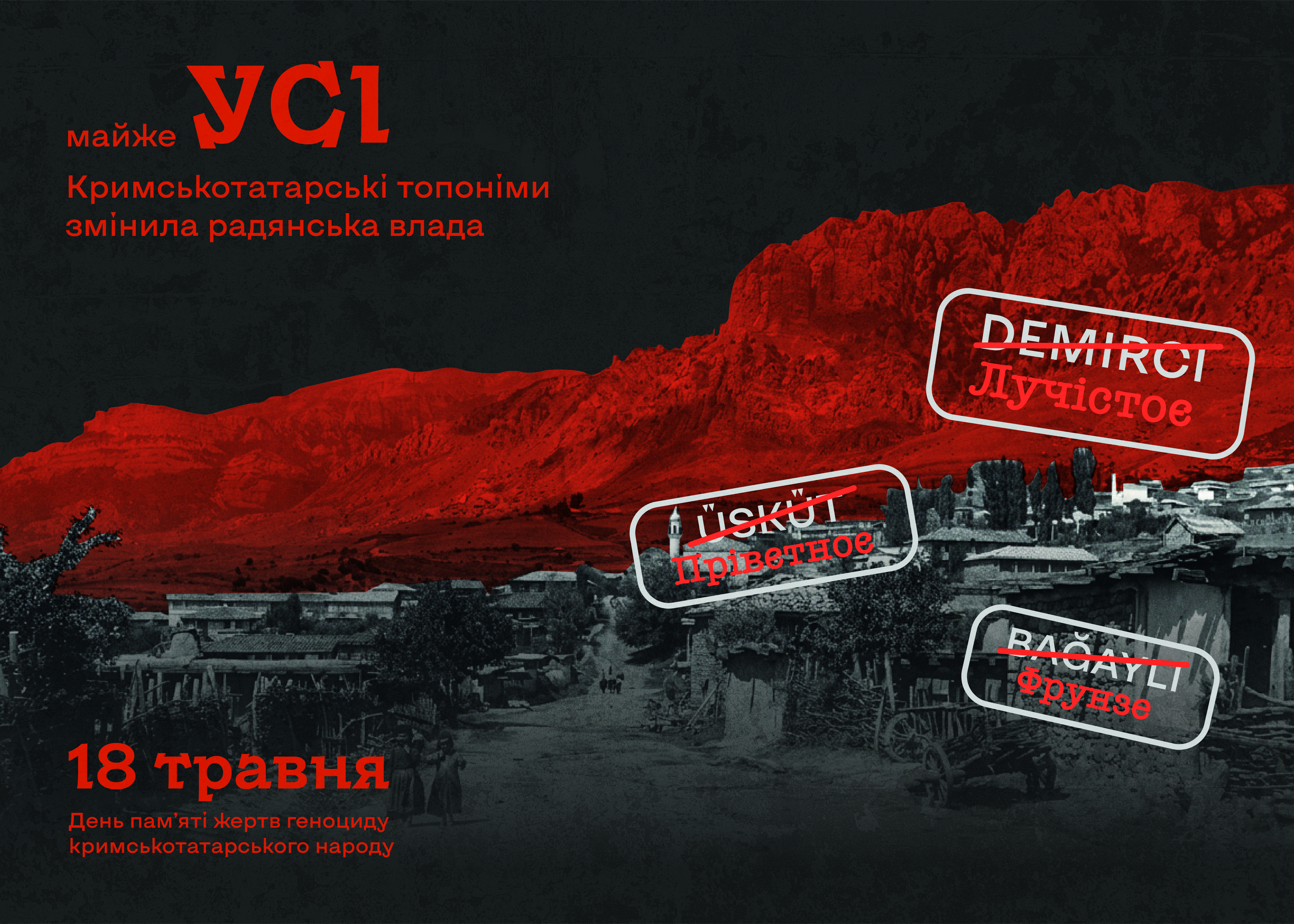
Settlers from the RSFSR and the Ukrainian SSR were brought to Crimea and deliberately housed in Crimean Tatar homes. The repressive Soviet regime completely changed and distorted Crimean toponymy; in particular, settlement and street names of Crimean Tatar origin were replaced with Russian ones.
The policy of the Soviet totalitarian regime against Crimean Tatars became an actual continuation of the traditions of the Russian Empire in colonizing the Crimean peninsula, which, after annexing Crimea in the 18th century, carried out expulsions of Crimean Tatars and restricted their rights and freedoms.
Thus, before Russia’s annexation (1783), Crimean Tatars made up over 92% of the population in the territory of the Crimean Khanate. According to materials of the fifth revision (census) of 1795, 157,319 people lived in Crimea, of whom 126,000 were Crimean Tatars. During the 18th–19th centuries, the Russian Empire pursued a policy of constant pressure on Crimean Tatars, limiting their rights and religious freedoms, burning religious books, and taking land and resources. A significant part of the indigenous people was forced to leave Crimea. The indigenous population of Crimea was replaced by colonists. Finally, on June 25, 1946, the Supreme Soviet of the RSFSR adopted a law approving the transformation of the Crimean ASSR into Crimea Oblast.
The tragic history of the deportation of the Crimean Tatar people was suppressed in the USSR for decades. The language and culture of Ukraine’s indigenous people were banned. Crimean Tatars were not only deprived of their homeland, but also of their own name, language, history, and identity.
After Stalin’s death, Crimean Tatars were never restored their rights nor allowed to return to their homeland. In fact, exile continued. Despite the ban, beginning in 1967, Crimean Tatars made numerous attempts to settle on their own land, in Crimea. The Crimean Tatar national movement for return was one of the most effective and vivid protest movements in the USSR. But truly mass return, repatriation, began after 1987.
Only after the collapse of the USSR, in independent Ukraine, can we honor the memory of the victims of genocide and speak the truth about crimes against humanity.
Historical facts
Crimean Tatars are an indigenous people of Ukraine, formed on the Crimean peninsula in the 13th–15th centuries as a result of cultural interpenetration among various ethnic groups that settled in Crimea in different historical periods. Their bloodline includes Scythians, Cimmerians, Tauri, Goths, Alans, Kipchaks, and many other peoples who lived in Crimea.
Formed in 1441, the Crimean Tatar state ceased to exist as a result of the annexation of Crimea by the Russian Empire in 1783. Under Khan Uzbek (1312–1342), Islam became the state religion.
From the late 18th to the 19th centuries, the actual displacement of Crimean Tatars from Crimea took place. Land dispossession, religious persecution, and Russification policy were the main causes of several waves of Crimean Tatar emigration.
After the February Revolution, on March 25, 1917, the Provisional Crimean Muslim Executive Committee was elected in Simferopol, headed by Noman Chelebidzhikhan—a lawyer, theologian, poet, and publicist. At Kurultai meetings in December 1917, the creation of the Crimean People’s Republic was proclaimed, and a democratic Constitution was adopted, the first in the Muslim world. Among other things, the Constitution provided for: independence of legislative, executive, and judicial branches; the right of all nationalities to self-determination; equality, namely abolition of estate privileges and full equality of women and men; freedom of person, speech, press, and assembly.
However, the Republic did not last long: in January, Crimea was occupied by the Bolsheviks. On February 23, 1918, Chelebidzhikhan was killed, and his body was thrown into the sea.
On October 18, 1921, by decree of the All-Russian Central Executive Committee and the Council of People’s Commissars, the Crimean Soviet Socialist Republic was created—an autonomy within the RSFSR. The Republic’s Constitution was adopted, according to which the official languages became Crimean Tatar and Russian.
The 1920s–30s were a contradictory period in the development of the Crimean Tatar people. In Crimea, the principle of priority support for the indigenous people—Crimean Tatars (the so-called policy of “korenizatsiya” or “tatarization”)—was proclaimed. But already in the second half of the 1920s, repressions began under the slogan of fighting local “nationalism,” so fierce that by the prewar years almost no national intelligentsia remained.
On April 17, 1938, a large group of representatives of the Crimean Tatar intelligentsia and political elite was executed. Among them were such well-known names as Usein Bodaninsky, Asan Sabri Aivazov, Abdulla Lyatif-Zade, Osman Akchokrakly, and others. Earlier, in May 1928, the head of the Crimean Central Executive Committee, Veli Ibraimov, had been executed. After the execution, the authorities initiated proceedings against members of the Crimean Tatar party “Milli Firka.” The Crimean Tatar clergy also fell victim to repression.
In 1921–1923, there was famine in Crimea, provoked by the procurement policy of Soviet authorities. About 100,000 people died, approximately 76,000 of them Crimean Tatars. Although the famine of 1932–1933 on the peninsula was weaker than in the rest of Ukraine, in Crimean Tatar memory this tragedy is also marked by the rescue of Ukrainians who fled famine to Crimea. In addition to famine, during collectivization in Crimea, in 1930–1931 alone, about 25,000–30,000 people were dispossessed and exiled.
Dawn of May 18
At dawn on May 18, 1944, NKVD troops began the deportation of Crimean Tatars. The operation lasted three days: people were forcibly taken to railway stations, where they were loaded into freight cars unfit for transporting people. The main part of deportees were women, the elderly, and children. Resolution “On Crimean Tatars” No. 5859ss was not announced during eviction; people were given 15–20 minutes to gather belongings. As a result of clashes with soldiers, many women were beaten and injured. Deportees were loaded into livestock transport echelons, 120–150 people per car. According to eyewitness recollections, they were not fed on the road, there was no basic medical care, and the dead were thrown out directly along the way. The last echelon with deported Crimean Tatars arrived at places of exile on June 8, 1944. Most Crimean Tatars ended up in Uzbekistan—about 151,000 people.
Local residents perceived them with hostility, as traitors and enemies. Crimean Tatar special settlers were sent to the construction of the Farkhad Hydroelectric Power Plant in Bekabad, the “Koytash” mines in Samarkand region and “Tashkent-Stalinugol,” as well as to collective and state farms in Tashkent, Andijan, and Samarkand regions, and in Shakhrisabz and Kitab districts of Kashkadarya region. For the most part, they were housed in barracks unfit for living, and at the “Koytash” mine they ended up literally out in the open.
Having found themselves in unfamiliar climate conditions, without basic means of survival, people were brought to the edge of life and death. Among Crimean Tatars who arrived in Uzbekistan, epidemics of malaria and gastrointestinal diseases broke out almost immediately.
According to official data, in the first months of exile alone—from May to November 1944—10,105 special settlers from Crimea died in Uzbekistan from disease and exhaustion, that is, about 7% of those who arrived. During 1944–1956, due to excess mortality caused by deportation and conditions in special settlements, 49,200 people died. The first four years in exile account for 65.9% of the total deaths. According to the census of the National Movement of the Crimean Tatar People, in the first years of deportation, 46.2% of the people died.
The object of genocide was not only the Crimean Tatar people, but also their material culture
After the eviction of Crimean Tatars, the Soviet authorities liquidated:
▷ 112 personal libraries
▷ 640 primary school libraries
▷ 221 secondary school libraries
▷ 360 reading huts
▷ 30 district and 60 city libraries
▷ 861 Crimean Tatar schools
▷ 24 museums
▷ editorial offices of Crimean Tatar newspapers and magazines, radio, theaters, museums, higher and specialized educational institutions
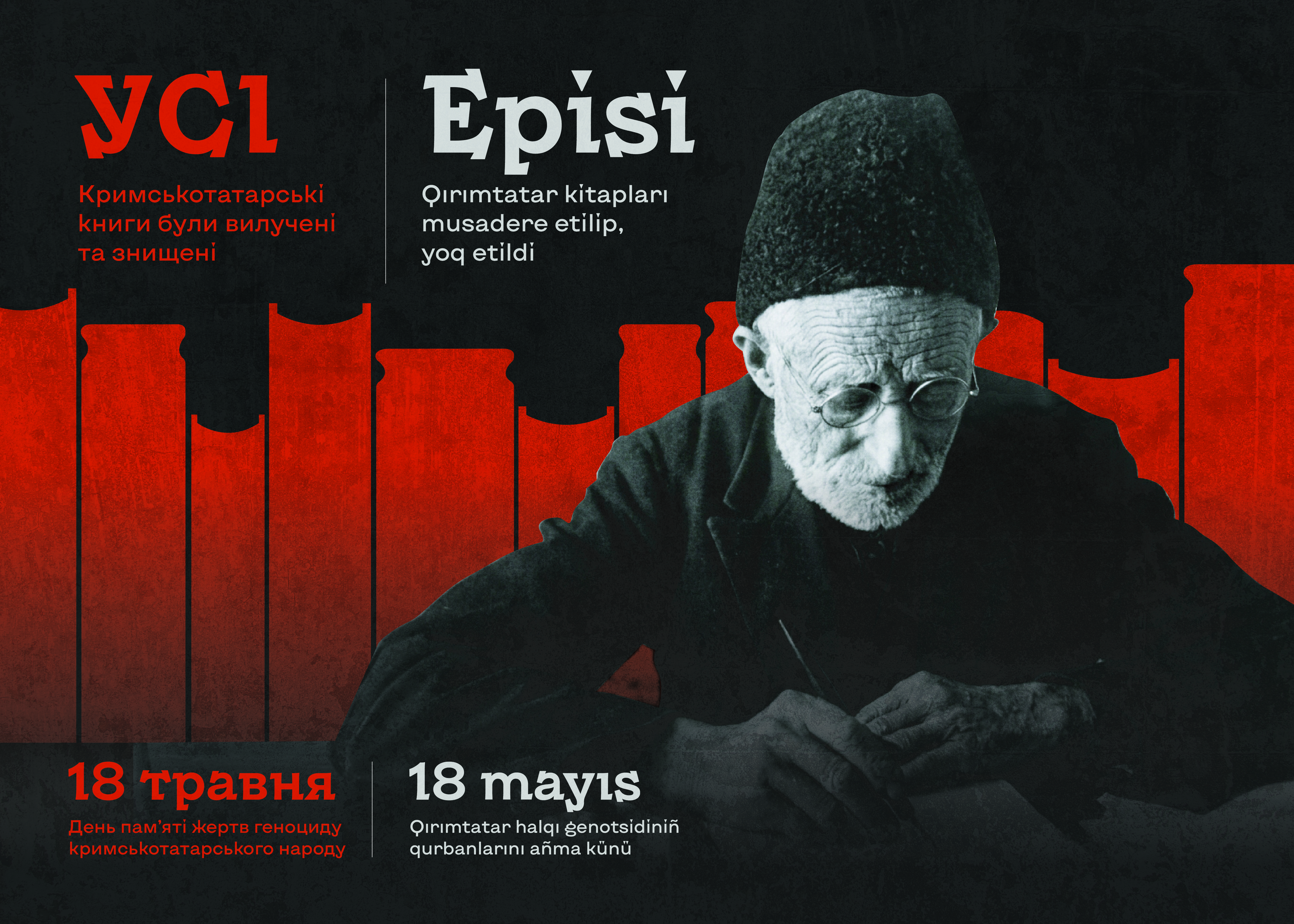
▷ book collections in the Crimean Tatar language, hundreds of unique manuscripts
▷ 63 orchestras
▷ 1600 cafes
▷ 237 amateur artistic groups
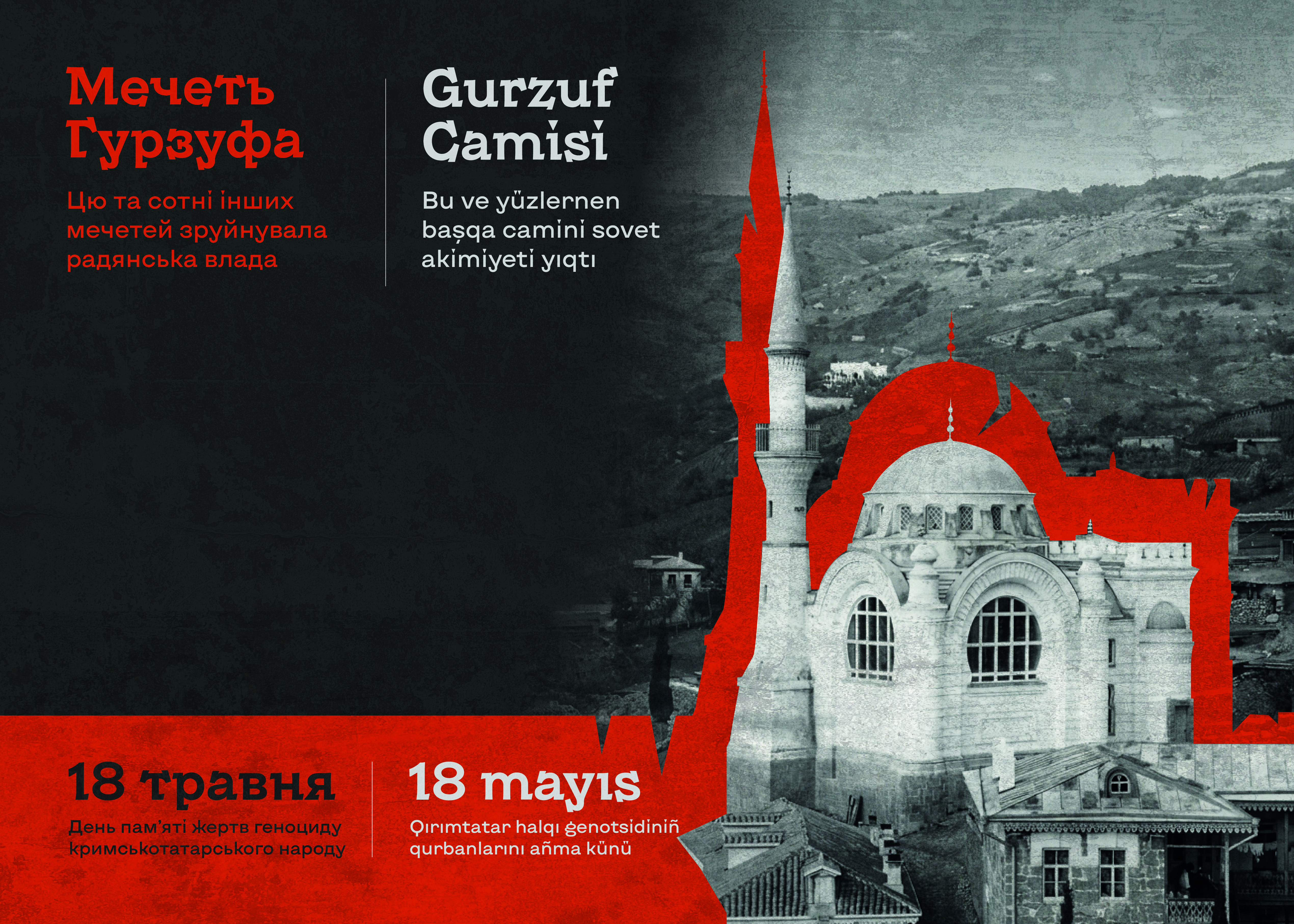
▷ 2400 cemeteries were razed to the ground; tombstones and shrines were destroyed; mosque and madrasa buildings were converted into shops, clubs, and warehouses
▷ The building of the oldest religious educational institution, Zinjirli Madrasa, was converted into a psychiatric hospital
▷ 80,000 houses, 34,000 household plots, 15,740 head of livestock, 420,000 items of dishes, furniture, clothing, and household goods were confiscated from Crimean Tatars. To this day, nothing confiscated in 1944 has been returned to any Crimean Tatar family
▷ Crimean Tatar toponyms and hydronyms in Crimea were changed in 1944–1945
▷ 11 district centers and 327 villages with Crimean Tatar names were renamed
In M. Khrushchev’s report at the 20th CPSU Congress, injustice toward deported peoples was mentioned for the first time. Soon after, the Decree of the Presidium of the Supreme Soviet of the USSR of 28.04.1956 “On lifting restrictions on special settlement for Crimean Tatars, Balkars, Turks—citizens of the USSR, Kurds, Hemshils and members of their families deported during the Great Patriotic War” abolished the special settlement regime for the mentioned peoples and released them from administrative supervision.
Lifting restrictions, in the case of Crimean Tatars, did not provide for the return of property confiscated during eviction, nor for return to the homeland. At the end of 1956, a CPSU Central Committee Politburo Resolution was adopted “On restoring national autonomies of the Kalmyk, Karachay, Balkar, Chechen and Ingush peoples” (24.11.1956). In 1957, repatriation of these peoples began. Crimean Tatars, Germans, and Meskhetian Turks were not given such an opportunity.
Rise of the Crimean Tatar national movement
The second half of the 1950s marked the first rise of the Crimean Tatar national movement, for which the Soviet totalitarian regime carried out arrests and detentions. The first political trial of activists took place in 1961. Enver Seferov and Shevket Abdurakhmanov were sentenced to 7 and 5 years of imprisonment respectively for leaflets found in their possession calling on compatriots to fight for return to their homeland.
In 1962–1967, several more trials against Crimean Tatar movement activists took place in Fergana and Andijan. In total, in 1966–1967 in Uzbekistan, according to the USSR Prosecutor’s Office, 59 Crimean Tatars were criminally prosecuted “for antisocial manifestations on nationalist grounds,” including: for hooliganism—55, for slander—3, for inciting national hostility—1. In order to “prevent disturbances of public order,” 766 Crimean Tatars in 1966 and in January 1967 were summoned to police bodies to be “acquainted with criminal legislation.”
In 1967, the Decree of the Presidium of the Supreme Soviet of the USSR “On citizens of Tatar nationality who previously lived in Crimea” was adopted, the main idea of which was that Crimean Tatars had “taken root in their current places of residence, and their return to Crimea is inexpedient.” The Decree canceled decisions of state bodies in the part containing accusations against “citizens of Tatar nationality who lived in Crimea,” but stated that they had “taken root in the territory of the Uzbek and other union republics.” In Resolution of the Presidium of the Supreme Soviet No. 494, adopted immediately after the Decree, it was stated that “citizens of Tatar nationality [...] and members of their families enjoy the right, like all USSR citizens, to reside throughout the territory of the Soviet Union in accordance with current legislation on employment and passport regime.”
The reservation about the “passport regime” was deceptive, as it involved creating administrative obstacles on the way to Crimea. Without propiska, that is, registration, Crimean Tatars could not buy a house or get a job. Nevertheless, by the end of September 1967, about 2,000 Crimean Tatars had arrived in Crimea, but almost none were registered. Yet the flow did not diminish.
By early 1968, the number of letters from Crimean Tatars to top state institutions had sharply increased. All of them asked for instructions to Crimean authorities to stop creating obstacles to registration. In the following years, authorities implemented the policy of “Crimea without Crimean Tatars.”
Crimean Tatars could not obtain registration in Crimea; peninsula residents were forbidden to sell housing to Crimean Tatars, and purchased houses were demolished with bulldozers. Those unwilling to accept this were prosecuted allegedly “for violating passport rules.” In protest against this policy, Musa Mamut self-immolated on June 23, 1978.
New rise of the national movement after the beginning of perestroika
In July 1987, Crimean Tatars came out to Red Square in Moscow demanding the people’s return to their homeland. In 1989, mass return of Crimean Tatars to their historical homeland began. Crimean Tatars who returned in the early 1990s began building their own housing from scratch, living with families in dugouts and tents without water, electricity, or heating. Under artificially created obstacles by local authorities and in the absence of opportunities to purchase housing, Crimean Tatars began independent construction of 300 compact settlement communities.
On June 26, 1991, the Second Kurultai of the Crimean Tatar people took place. The Mejlis, a representative body of Crimean Tatars, was elected.
In the first years after return, the Crimean Tatar theater was revived; the folklore ensemble “Kirim,” the I. Gasprinsky National Library, a museum of historical and cultural heritage of Crimean Tatars were created; the first radio and TV broadcasts in the Crimean Tatar language appeared; and construction of schools and mosques began.
However, today Russia continues to carry out systemic practices aimed at destroying Crimean Tatars who disagree with the occupation of the Crimean peninsula and condemn the criminal actions of the occupying state. Destruction of cultural and historical monuments of Ukraine’s indigenous people, detentions and persecution of people, house searches, rewriting history, threats and pressure, illegal mobilization into the Russian army—this is the reality Russia has created in Crimea since 2014. Only the de-occupation of Crimea and restoration of Ukraine’s control over the peninsula will help restore justice, rights, and freedoms of people, including representatives of the Crimean Tatar people.
What is worth remembering
◆ Deportation of the Crimean Tatar people by the Soviet totalitarian regime is an act of genocide. Intentional killings were carried out, serious bodily harm was inflicted, and living conditions aimed at physical destruction of Crimean Tatars were deliberately created. In Canada, Latvia, Lithuania, Poland, Estonia, and the Czech Republic, deportation is recognized as an act of genocide of the Crimean Tatar people. Ukraine is working toward further recognition of this act of genocide by other countries.
◆ The communist regime of the USSR and later Russia deliberately spread for decades the myth of Crimean Tatar “treason.” Today the occupying state still uses this narrative to spread hate speech, oppression, and discord in occupied Crimea.
◆ The Russian Federation continues a policy of oppression of Crimean Tatars, namely: deliberately violates the rights of Ukraine’s indigenous people, carries out illegal military conscription, destroys cultural heritage, falsifies history, and militarizes education and public life.
◆ The Russian Federation denies the genocide of Crimean Tatars in 1944 and does not take responsibility for Stalinist repressions and deportation.
◆ The Russian Empire and its legal successors—the Soviet Union and the Russian Federation—deliberately carried out forced and semi-forced displacement of Crimean Tatars from the moment of seizure of the Crimean peninsula in the 18th century, erased and rewrote the history of Ukraine’s indigenous people, since the historical legacy of Crimean Tatars and their very presence on the peninsula threatened the establishment of the fabricated myth of the “primordial belonging of Crimea to Russia” and interfered with the policy of Russian colonization of Crimea.
◆ Since the occupation of the Autonomous Republic of Crimea and the city of Sevastopol in 2014, the Russian Federation has deliberately carried out repressions against the Crimean Tatar people, continuing the crimes of the Soviet totalitarian regime and the Russian Empire.
◆ The Ukrainian people, who suffered persecution and repression and were also victims of the Soviet genocide of the Holodomor of 1932–1933, deeply understand and share the pain of the deportation—the genocide of the Crimean Tatar people—this is a common tragedy, a tragedy of the Ukrainian people. Ukraine is working to ensure that the genocide of the Crimean Tatar people is recognized at the international level, as well as by other nations that suffered from similar crimes of totalitarian regimes.
◆ Even 80 years after the deportation, the Russian Federation continues totalitarian, Soviet in character, imperial traditions of enslavement by carrying out comprehensive and systemic repressions against Crimean Tatars who oppose the occupation of the Crimean peninsula and bring Crimea’s liberation closer.
◆ The Russian Federation creates conditions for a “quiet deportation” of Crimean Tatars through repression, threats, implementation of the “Russian world” policy, and the narrative of a “holy war” against Ukraine and the West.
◆ The Russian Federation has brought to Crimea politically motivated persecution, enforced disappearances, killings, deprivation of freedom of speech and religion, militarization of childhood, and continues totalitarian traditions of repressing Crimean Tatars.
◆ Direct heirs of NKVD traditions and methods, Russian security structures use the same methods, creating on the territory of the occupied Crimean peninsula a center of repression, fear, and deliberate violations of human rights and the rights of Ukraine’s indigenous peoples.
◆ Until crimes against humanity, including the genocide of Crimean Tatars, are adequately assessed, there is always a possibility of repeating the horrific practice of destroying national communities, which is exactly what the occupying state is doing today.
◆ The crime of genocide of Crimean Tatars is a component of Russian colonization policy and a crime against humanity.
◆ After the temporary occupation of Crimea, the aggressor state, just as the Soviet totalitarian regime did 81 years ago, is committing a crime against international humanitarian law—population replacement in Crimea. Migration of Russians to Crimean Ukrainian land, the homeland of Crimean Tatars, is deliberately supported and stimulated.