


Sievierodonetsk is a relatively young city, and throughout the years of its existence, it never had its own historical and local lore museum. Despite numerous discussions on this topic and attempts to launch it, the museum never became operational.
In fact, this role was always fulfilled by the Museum of the History of the "Azot" plant—the enterprise thanks to which, essentially, Sievierodonetsk appeared.
Founded in 1974 as a museum of the chemical plant's labor glory, it received the title of "national" a few years later. Thousands of museum exhibits were collected with the help of caring people—enthusiasts, researchers, and local residents who brought their own belongings related to the construction and operation of the enterprise.
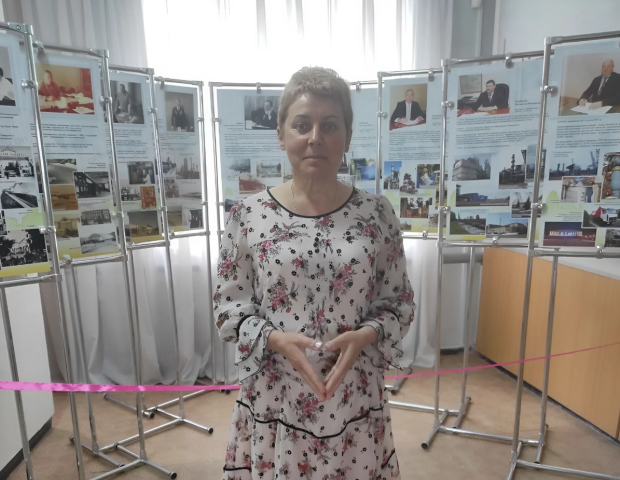
The plant, on whose territory the museum was located, took care of the exhibits and the museum itself. And for the last 12 years, Olha Holovko served as the head, tour guide, and keeper of values all in one. We met her during a visit to a shelter for displaced persons in Samara. She has been living there for almost a year now, and before that, she lived in Germany for over two years.
SD.UA interviewed Ms. Olha about her work at the museum and its unique features, as well as her own journey: from moving to Sievierodonetsk to living with the status of a displaced person.
– Ms. Olha, please tell us about yourself. Are you originally from Sievierodonetsk? Where did you study and work before heading the museum?
– I am a native of Oleksiivka, Bilokurakyne district. I was born into a family of rural intelligentsia. My mother was a teacher of Russian language and literature at school, and my father was a cultural worker. I graduated from school in Oleksiivka. Then there were attempts to enter a pedagogical institute, but my father was categorically against me becoming a teacher. So I moved to Lysychansk, where I completed courses for typist-secretaries.
In 1981, I moved to Sievierodonetsk. I got a job at a technical school in my specialty and worked there for 11 years. At first, I lived in a dormitory, and later I received a one-room apartment from the technical school.
While working, I graduated from the library department of the Luhansk College of Culture. This allowed me to move to a job at the Sievierodonetsk Central City Library. I worked there for three years, and then I was invited to the "Azot" chemical plant, to the library of the "Yantar" health resort. Then there was the plant's trade union library, which was located in the Chemist's Palace of Culture. In parallel, I obtained a higher education: I enrolled by correspondence in the "librarian-bibliographer" specialty at the Kharkiv State Academy of Culture, which I graduated from in 2002.
– And how did you end up working at the museum?
– I was already in my 30s when I was getting my higher education. Having life experience behind me, I wanted to present the library to the reader in a new way. Therefore, I resorted to experiments.
Once at the academy, we were asked to write about the library where we work. I turned to the director, thinking that the history had already been written, because the trade union library was already over 50 years old at that time. But it turned out that no one had done this before me. So, having two weeks before the session, I collected material. I tracked down people who once worked there. When I defended my work at the academy, the head of the department was impressed and suggested I continue it.
The library was actually very interesting. When it was organized, more than 2,000 books were transferred from Kyiv to Lyskhimbud (the name of the workers' settlement back then), including unique copies that were several centuries old. I described all of this in my work, and thus a brochure about our trade union library was published.
Such work—searching, inquiring, comparing, describing—captivated me. So, while working in the library, I started making brochures about "Azot" itself. In total, I released four such works.
Well, then at the plant, I think they noticed my abilities, so they invited me to work in the press center as a radio correspondent. It was also an interesting experience, but my voice, unfortunately, is not for radio. It was easier for me to write than to comment. That part was difficult, so I only lasted there for a year.
But when I was still writing brochures, I often turned to the museum for information, specifically to the head, Liudmyla Mykolaivna Katunina. That's how we became friends. When she decided it was time for her to retire, she proposed my candidacy for the position.
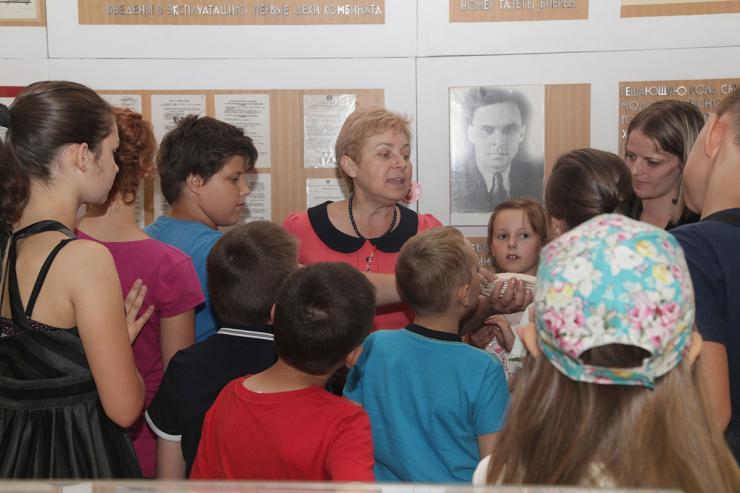
Excursion at the museum for IDP children
– Where did you start your work?
– That was 2011. In 2009, the leadership at the plant changed abruptly. Our enterprise became private. This brought many changes, including in the museum. Active renovation began.
A very large amount of work was organized: two of the three halls were renovated, equipped with new technology, new display cases were made, and much more. I cannot say that I did all of this alone. Everyone helped. New exhibitions were opened, numerous meetings were held with "Azot" veterans who were 80-90 years old. In general, we talked to a huge number of people!
People continued to bring us exhibits. Everything was documented. If something new and interesting appeared, we immediately presented it on social media and in the media.
At that time, many guests began to visit us. Not only from cities in Ukraine but also delegations from abroad.
– How many exhibits were in the museum by 2022?
– I can't give an exact figure anymore, but around two thousand.
– Which of them did you personally consider the heart of the museum?
– The city arose because the construction of the chemical plant began there, and at the place where Sievierodonetsk is now, there was a sandy desert. So for me, these are exhibits related precisely to the years of the chemical plant's formation: the 30s of the 20th century.
By the way, I want to highlight one point separately. When the museum was just being organized in the early 70s, people brought various personal items there, including documents. Issued in the Ukrainian language! Do you understand what I'm getting at? Until the 40s, it was truly Ukraine here.
It was only after World War II, as it was explained to me, that many Russian speakers arrived in the city. Specifically, orphans from the Urals. Therefore, documentation began to be kept in Russian. I don't have evidence to confirm this specific version, but I've heard it many times.
It is also important that people, many of whom were already at a venerable age, preserved their documents. Because they testified to how hard they worked back then. The working conditions were truly not for the faint of heart. Sand everywhere, far from drinking water. Cold in winter, and terrible heat in summer. But people built! And many years later, they were happy to hand over their documents, photos, items, and letters to the museum, which testified to their involvement in a great cause.
I remember a case: an old man comes to the museum, asks to look around. We go up to one of the photos, and he says: "Do you know who this is?" I'm reading the description. And he says: "That's me when I was young, 60 years ago. I'm 20 here."
At the plant, young people took advanced training courses. By tradition, their first lesson was at the museum to introduce the young specialists to the history of the chemical plant. It was very pleasant to see when they recognized their relatives in old photos: "That's my grandfather, look! And that's my grandmother." Then their parents worked there, and later they did too.
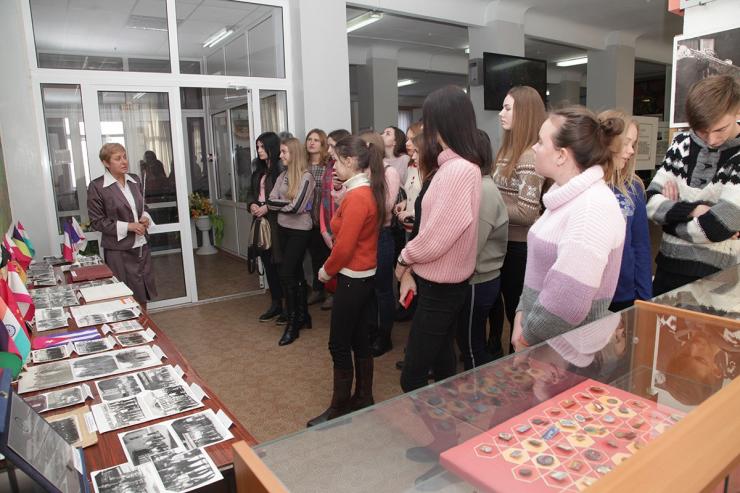
Students of Dahl SNU on an excursion
This is the history of our Sievierodonetsk, inseparable from the history of the "Azot" chemical plant. And if I summarize the answer to your question, I will say this: I am grateful to fate for giving me the experience of working in this museum. There, I felt like a bridge, a guide between the past and the present. And every exhibit was dear to me precisely because of this feeling.
– You say people gave their letters to the museum. Do you remember what they were about?
– Again, from the times when they just started building the plant... A letter from a girl, a chemist, who had just graduated from the Leningrad Institute and arrived in our region. It's around 1934-35. She writes how she and two other colleagues got off at the railway station in Lysychansk and stand there, confused, not knowing where to go next. They ask passers-by, and they show them the approximate direction: there, they say, is Lyskhimbud.
Impressed, she writes: "We look in that direction, and in front of us is just a desert."
Well, what could they do. They hired some carriage, loaded their things. They set off. And the road was terrible: sometimes it was there, sometimes it wasn't. Sometimes they rode, sometimes they walked. They crossed a wooden bridge over the Siverskyi Donets. And then they saw that there was life here, some huts were standing. They asked to stay the night, and then they looked for the construction management.
That struck me. How people arrived and saw a desert. That's how the life of our city began!
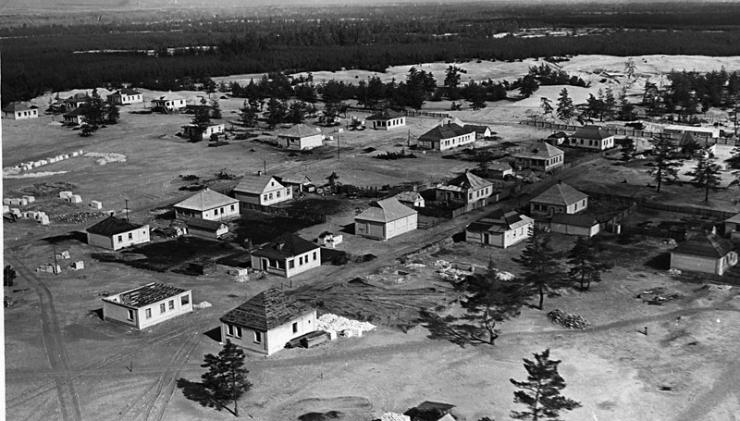
Lyskhimbud houses
– You probably heard many such stories from the plant veterans you spoke with?
– Yes! The story of Vasyl Ivanovych Tatarchenko sticks in my mind. He and the boys in his brigade were maybe 18-19 years old. They were pulling the electrical grid in this same desert.
He says a tractor pulls the poles to them on a trailer, unloading 10-12 at a time. And then they carry them on themselves, installing them every 50 meters. It's already lunch time, and the canteen is 3 kilometers away. By the time they run there, 10 minutes are left to eat, and back again—they couldn't be late. There were times they didn't make it, so they were hungry all day.
His wife also recalled: after the war, they were brought to a dormitory. There were four beds in the room, but five girls. They were still children of 13-14, but they already worked in shifts unloading trains with equipment. Therefore, they also slept on the bed in shifts: the neighbor is on the night shift—she sleeps on the bed. Tomorrow she's on the night shift—then the neighbor rests there. The conditions were very poor. People suffered from serious illnesses.
By the way, managers worked side-by-side with workers.
One veteran woman told me that when she worked in the repair and mechanical shop, the shop was headed by—a woman. And she worked in it along with her subordinates. She didn't manage from an office but was in the shop with the people. It's hard to imagine that now!
People were different. They knew how to dream. And that gave them strength. They explained it to me like this: "We understood that we were building the future for ourselves and our children." That was the trend back then.
Of course, they received a salary. But that wasn't the main thing. From all my conversations with them—whether they knew each other or not—what united them was pride in the fact that they were the ones who built the plant and the city.
And so, when they started bringing exhibits to the museum, it was like a second birthday for them. Because, aha: now everyone will know that they were involved! Extraordinary people. Some of them had only three grades of education. Families, perhaps, were not all prosperous. There were many losses. But from the understanding that he contributed to the construction of something truly great, a person just glowed from within!
Thank you for touching on this topic. Now it will give me support too. Because people went through such things! And I will somehow manage slowly, as they say.
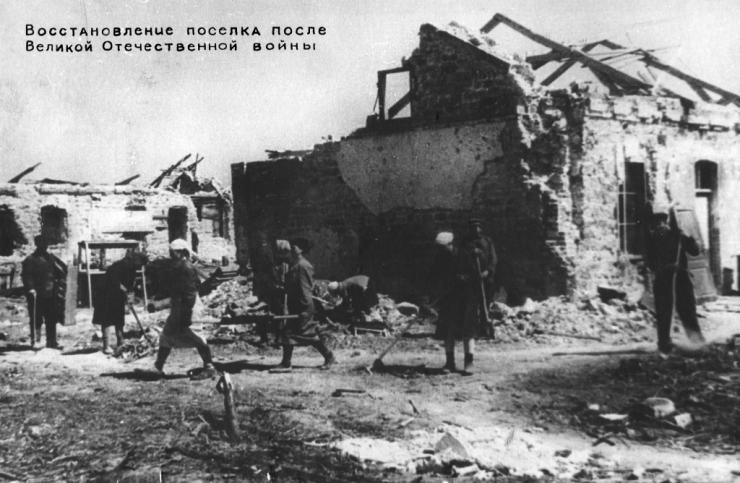
After the war
– Well, and they truly built a great, interesting, modern city. By the way, do you remember your first impressions of Sievierodonetsk when you first arrived there?
– I liked the city immediately for its wide streets. And many flowers! Roses that grew along Hvardiyskyi Avenue. Just an incredible number of them in a place where almost nothing grew before.
I also really liked the clean natural water. And the people, of course! When I was collecting information for the museum, I was told that the average age of the first residents—the people who started building the plant—was 27. And the managers who arrived were people who had received a good education in the major cities of the Soviet Union.
Therefore, we truly always had a high concentration of educated, motivated, and talented people. And most importantly—people who sincerely love their city and are proud of it!
– When non-local delegations visited the museum, what did they say? What were their impressions of the museum and "Azot"?
– Ukrainian delegations always asked how we managed to collect all these exhibits. Well, I replied that my predecessors mostly collected them. And I explained it just as I did to you. That the plant tried to organize a museum, and the people responded.
And those from abroad... For example, for five years, art historian Peter Schwarz from Germany came to us in Sievierodonetsk, brought creative delegations, and lived in the city himself. Of course, they came to our museum. Even his parents were there.
The Germans were surprised that we preserved exhibits related to German soldiers. We have a separate exposition where such things are collected. They were found and handed over to the museum by local searchers at one time. By the way, another example that it wasn't just the leadership issuing an order to create a museum, but the whole city took care of this matter. And Luhansk, Kharkiv, and Kyiv helped.
So the searchers gave items of German soldiers to the museum. The Germans discussed these exhibits; some of them they said they saw for the first time exactly in our museum. And they were surprised that we didn't get rid of these things but put them on display.
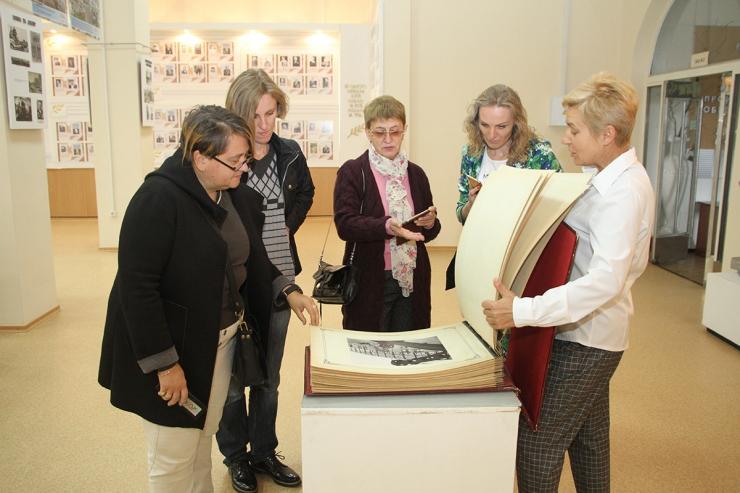
Participants of the theatrical festival visit the museum
– It seems that a new exhibition opened shortly before the full-scale invasion?
– Yes, we opened an exhibition with information about all the directors of our enterprise. We decided these would be stands with a photo of the leader—as he was when he managed the plant—and then a short biography of what was achieved under him.
You see, technologies were being improved. This doesn't mean that as the plant was built in the thirties, so it all stood. No, it developed because many countries wanted to receive high-quality mineral fertilizers. And for this, it was necessary for the equipment to keep up with global trends. Therefore, something was changed approximately every 20 years. It’s no wonder we had six research institutes in the city.
So, there were 9 leaders. And each of them made his contribution to the development and modernization of the enterprise.
– Among the famous figures in the history of "Azot," was there a person you were particularly interested in telling museum visitors about? Someone you admired, perhaps?
– I'll say this. Recently, my attitude towards this topic has changed significantly. It is a pity that for decades the history of these people and their achievements was presented exclusively through the prism of party ideology.
Because of this, the personal dimension and the view of their destinies were lost. And precious time, when we could have known these people more deeply and fully, was lost.
I can say, for example, that I admire a conditional Petro Petrovych. But it is also known about him that he sympathized with the Soviet government, to which I personally do not relate very positively. Everything was fine, but for me, when Ukraine gained independence, it became better.
Of course, I respect the people who gave their best years to building the chemical plant. But to say that I personally admire someone now, I cannot.
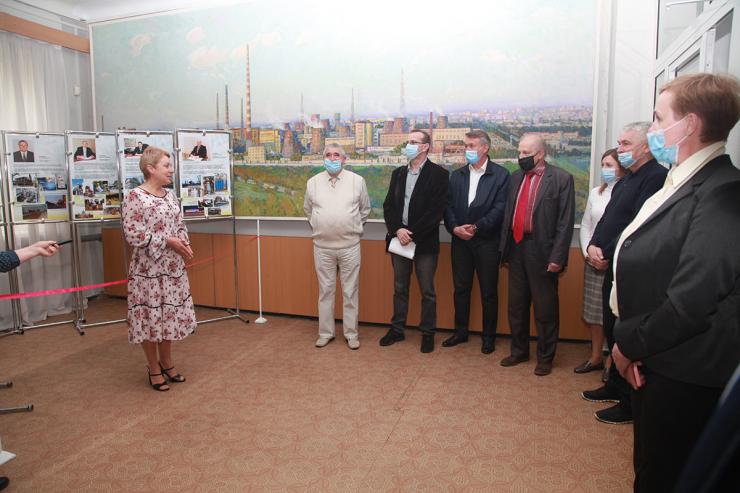
Opening of the exposition about the directors
– Was this "Ukrainianness" always with you, or did it awaken at some stage of our country's development?
– I studied in the Ukrainian language at school, and my family also spoke Ukrainian. Documents and newspapers were in Ukrainian. And when I already arrived in the city and started taking entrance exams, they also accepted them from me in Ukrainian.
Studies were already in Russian. Then work was in Russian. But I somehow didn't attach special importance to this. So yes, probably, Ukrainianness appeared in me later.
For me, this began to matter when I moved to work in the press center in 2010. There, only the internet was in Ukrainian and television. But the newspaper came out in Russian, and the radio broadcasting was also in Russian. I, not considering myself an ardent patriot then, said: "But I have a perfect command of Ukrainian. I can cover topics on the radio in Ukrainian." That was a personal wish, but it didn't work out. They made it clear to me that they weren't going to change anything.
Then I moved to the museum, where everything was in Russian in general. And at first, while I was getting used to it, while I took over all the affairs, I didn't raise this issue.
And then, when new managers came to us and recommended modernizing it, I felt that our desires coincided. I started actively reworking the stands and information materials into Ukrainian and conducting the excursions in the Ukrainian language myself. And here I didn't back down. Because I worked there alone: as the head, the tour guide, and the one responsible for the funds.
There were cases where some delegation arrives and they say: "Can we switch to Russian?" I say: "No, we are in Ukraine, I conduct excursions in the state language." And that was it, there were only one or two such cases. In general, everyone took such changes normally.
– Tell me, please, were there any plans or dreams for the further development of the museum that the war didn't allow to materialize?
– Before I headed the museum, and during the almost 12 years I worked there, a lot was implemented, written, and highlighted—a giant job. And to say that something fundamentally new was planned in terms of thematic content, then no.
The enterprise developed at its own calm pace. There were no longer such achievements as those made by people who didn't eat lunch and slept in shifts. Therefore, recently I switched more to highlighting our activities in the media and social networks. For example, I'm wiping the exhibits—and I did this myself, I didn't trust anyone else with those display cases—I find an object about which I want to tell a separate story—and there's already ready material for the media.
There were plans to set up several screens in the halls, 5-6 pieces, which would have made it possible to supplement the excursion. Because we had a large video archive. It would have been possible to demonstrate everything that is discussed in the exposition: to bring it to life, so to speak. About the beginning of the chemical plant's construction, the operation of the first shops, etc. Unfortunately, the war didn't allow this to happen.
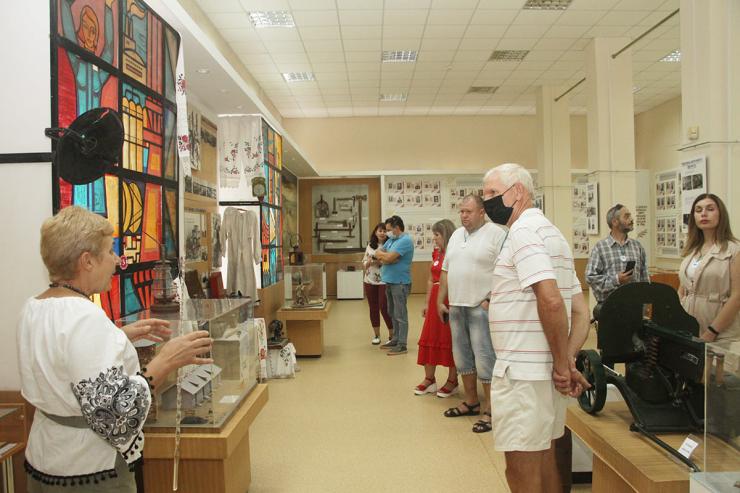
The museum is part of the city excursion route
– Do you remember your last day at the museum?
– Yes, of course. I came to work, there was already some incomprehensible running around in our building. Everyone was talking about loud explosions. I turned off the alarm, turned on the computer, and started the working day. And two hours later, the manager called and told me to pack my things, close everything, and go home, because the shelling of the city and the chemical plant had already begun.
I took only the most necessary things then. Honestly, there was no thought at all that this would drag on for long. I had seedlings growing there. I didn't take them. I thought: "Well, this is for two or three days. Why? Let them stand on the window, I'll come back and water them."
When I went down to the first floor, there were people there helping to move books from the archive somewhere. I even stopped and said: "Do you need my help?" They: "No, no, you decide with your manager what to do."
So I went home. And after that, I can't say exactly what I did. I try not to keep it in me, because it hurts me a lot.
– So, all the exhibits from the museum remained under lock and key?
– Yes, unfortunately. Later, I don't know when, there was a hit to the roof. It was pierced from the third to the first floor, and the windows were broken. I even saw a video. They say that everything allegedly burned inside. I don't know if the museum itself burned; it wasn't clear from the footage. That was the last way I saw it. The occupiers don't write anything about the museum.
– And you don't have anything left in electronic form?
– No. We wanted to digitize everything. But it was only in the plans. Therefore, I think the history of the museum in the form it was has ended. The exhibits are already lost.
– If you were offered to recreate the museum in evacuation now, would you join?
– No. I've thought about this a lot and concluded that it's not interesting to me now. I believe this is a matter for the next generations. And it is up to them to decide in what perspective to do it, what to emphasize.
– When were you in the city for the last time and how did your future fate turn out?
– I left on April 2, 2022. At first, I was hiding in the basement of school No. 17, near my house. But when the explosions got closer, my nerves couldn't take it, I took my things and ran to the Builders' Palace of Culture. Because I heard that people were being sent from there to the railway stations. The enemy gives three hours of silence, they don't shell.
I spent the night there with an acquaintance, and the next day I got on one of the buses that were being pulled up to the Palace of Culture. We were brought to the railway station. We stood in line for the train for a day and then went to Lviv. There were 7-8 people per compartment in the carriages.
I got off at the station there, I'm standing, and I don't know what to do. Then Halyna Kopylova, a refugee from Luhansk who had been living in Sievierodonetsk for 6 years, calls me. I tell her my situation. And she gives me the phone number of a Lviv volunteer, Iryna Dzioba. She picked me up, washed me, fed me. And then she asks: "Do you have any acquaintances abroad?" I say: "The only acquaintance I have abroad is Peter Schwarz, but I don't have his number." Well, Iryna helped find him, we called him.
He advised going to Germany, to Eisenhüttenstadt. I traveled there through Poland by a free bus. In Eisenhüttenstadt, in a refugee camp, I stayed for a month and a half, then they started taking us to other cities.
That's how I ended up in Spremberg. There, they first settled us in a school, like a dormitory. And three months later, they offered a one-room apartment. Accommodation is free.
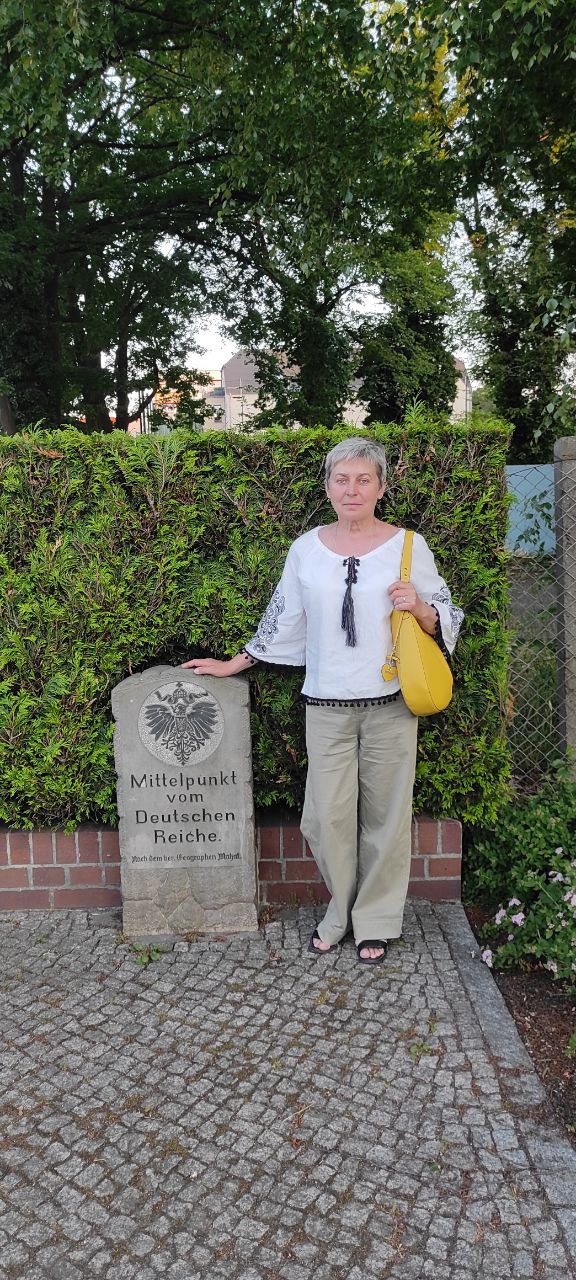
Spremberg, June 2022
They gave money for furniture, because there they rent apartments completely empty. Later, two other women, also refugees but from the Donetsk region, moved into this building, into one-room apartments.
A year after arriving in Germany, I finished German language courses (also free, because it's a state program) and got a job at a local library, where I worked for six months.

With librarian colleagues, November 2023
In Germany, I turned 60, it was time to apply for a pension. But my labor record remained at the plant. Therefore, I had to look for witnesses—two people for each place of work—to confirm my seniority until 1990. In a month, I called 83 people! Someone didn't have a copy of the labor record, someone didn't have a marriage certificate, or something else. It was possible to find only 11 former colleagues who had all the documents to certify my work seniority. Every two months I traveled to Lviv until I collected all the necessary documents. Against this background, I had depression.
While I was traveling, I felt that I was uncomfortable in Germany, I couldn't stand it... Germany did everything so that it would be good for us there. But I still want to go home, I want to go to Ukraine. And I decided that I was returning.
The same volunteer Iryna Dzioba drove me out. My acquaintances, translators Monika and Gerdt, saw me off. And when they put me in the car, they handed over 100 euros for the AFU. And Ms. Iryna and I handed them over to our defenders in Ukraine.
I want to say that all this time I was truly lucky with people. Thanks to such people, as you can see, I am still alive.
– Now you live in a shelter organized by the Sievierodonetsk CMA in Samara, Dnipropetrovsk region. How did you get there?
– Having returned to Ukraine, at the beginning I lived for three months with Iryna Dzioba's parents in a village in the Lviv region.
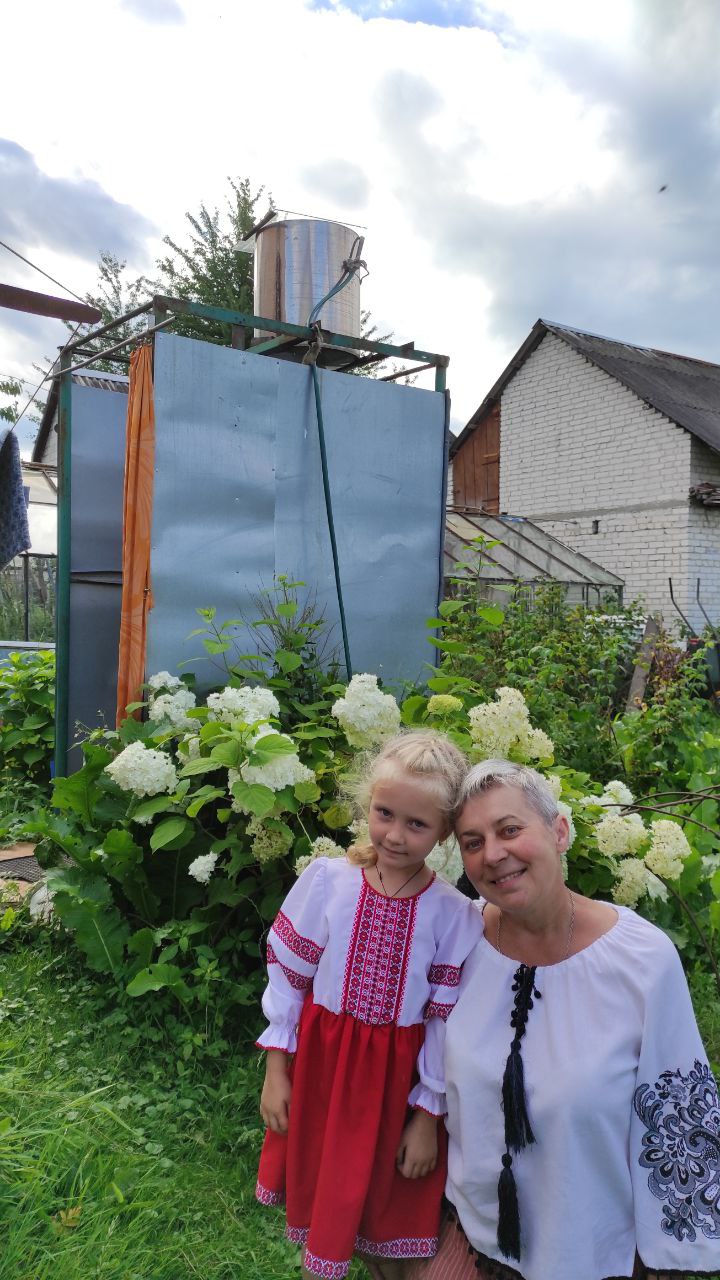
Back in Ukraine, July 2024
But the people are already 80 years old. You understand yourself that a stranger in the house makes everyone uncomfortable. An acquaintance offered to move to him in Cherkasy. But it didn't work out.
Next was Kharkiv. I got there exactly when they started to mass evacuate people from Kupiansk. I was given the phone numbers of six dormitories, but none had vacancies.
Despite this, I want to say that I was struck by the dedication of the workers at the distribution center for displaced persons. Several thousand refugees, a tense situation, continuous shelling. Yet people found the strength to support the victims. They will receive you, calm you down, hold your hand, calmly consult you.
I caught myself thinking that I see two such opposites. There, at home, I was betrayed by people with whom we were supposedly doing a common thing. And here, from strangers, there is such support. That is, I learned even more about a person than I knew in my 60 years.
In Kharkiv, I was given the contacts of the Sievierodonetsk CMA. I called, they told me they would help, and offered a place in the shelter in Samara. On the second day, I was already in the Dnipropetrovsk region.
In the shelter, I met acquaintances from Sievierodonetsk. Then a man who takes care of the shelter called me to find out how I settled in, how my affairs were going. It turned out to be Yevhen Kondratov. I knew his father well and him too; we worked together at "Azot."
I am among my own! And, you know, I gained so much strength immediately! I realized that I am at home. That was the emotion I had. And I want to convey it to you. Don't give up! God has everything in store for us, as they say.
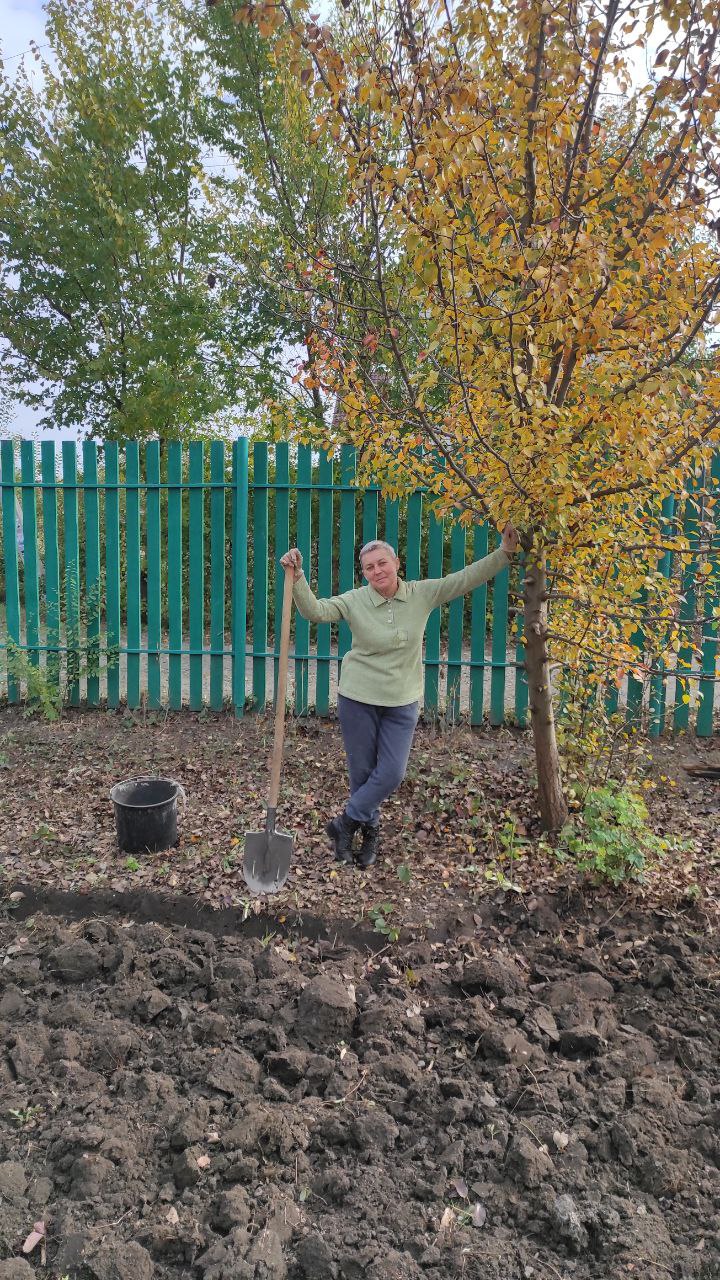
A small garden near the shelter, November 2024
– I see that you are satisfied. Is there no discomfort that this is a dormitory, temporary housing? Because for many displaced persons, this is already a trigger…
– In general, as soon as I came here, I immediately started looking for what to do and how to keep busy. I went to the Palace of Culture: there were clubs for yoga, Nordic walking, knitting, psychology. I went to psychology and started knitting.
Now I'm attending English language courses. Together with me, they are attended by people who have a goal. They all work, but they go to English. And people who dream of something and strive for something attract me very much. And that's what I saw in them and decided: "That's it, I'll go."
In the shelter, I am also surrounded by pleasant, sincere people. I have everything here; the accommodation is free.
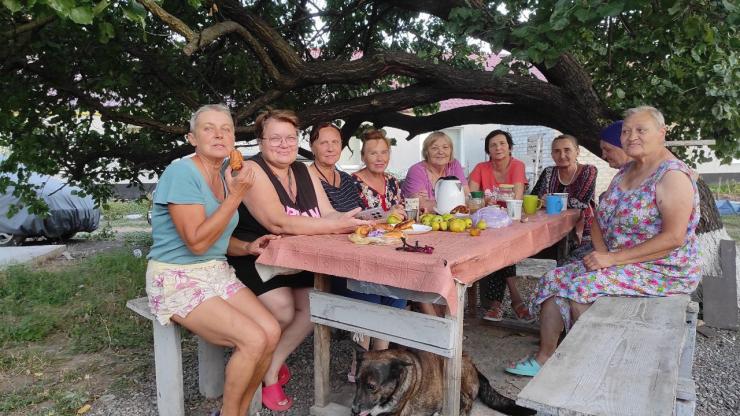
Rest after cleaning the shelter territory for Independence Day, August 2025
Of course, I want to return to Sievierodonetsk. I have both an apartment and a dacha there, which I love very much. Although I've already planted a little garden here too. Around our dormitory, the residents have already planted many flowers, and I joined in too. Our yard is so bright!
Am I satisfied now? Yes. You see, people are different, and everyone draws their own conclusions about what is a priority for them. I have no children, I have no one. No one to worry about. In my situation, everything suits me very well.
As I already said, over the last three years, I have reviewed my attitude towards people and circumstances. And I value what I have today.
Maryna Teslenko